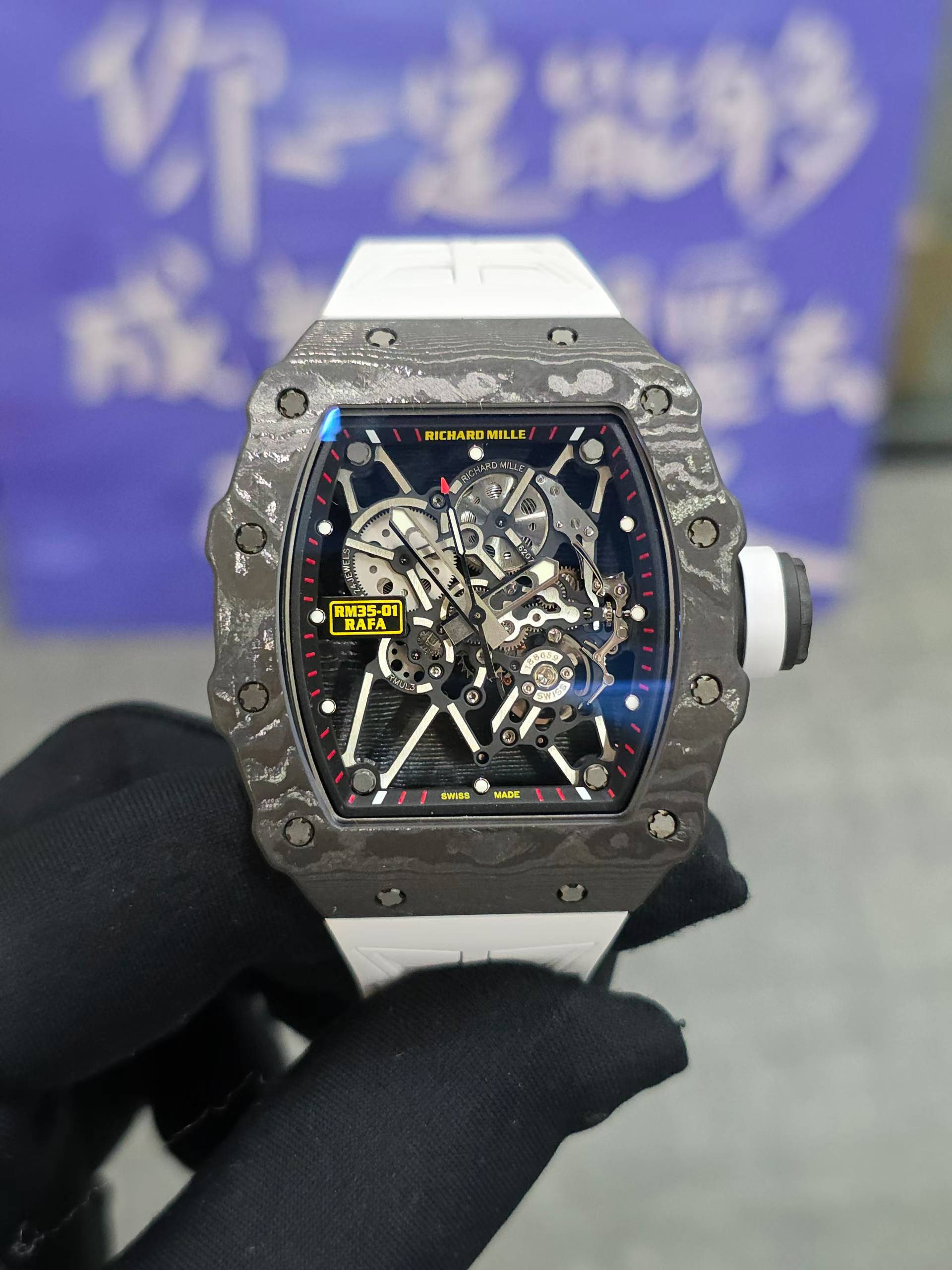
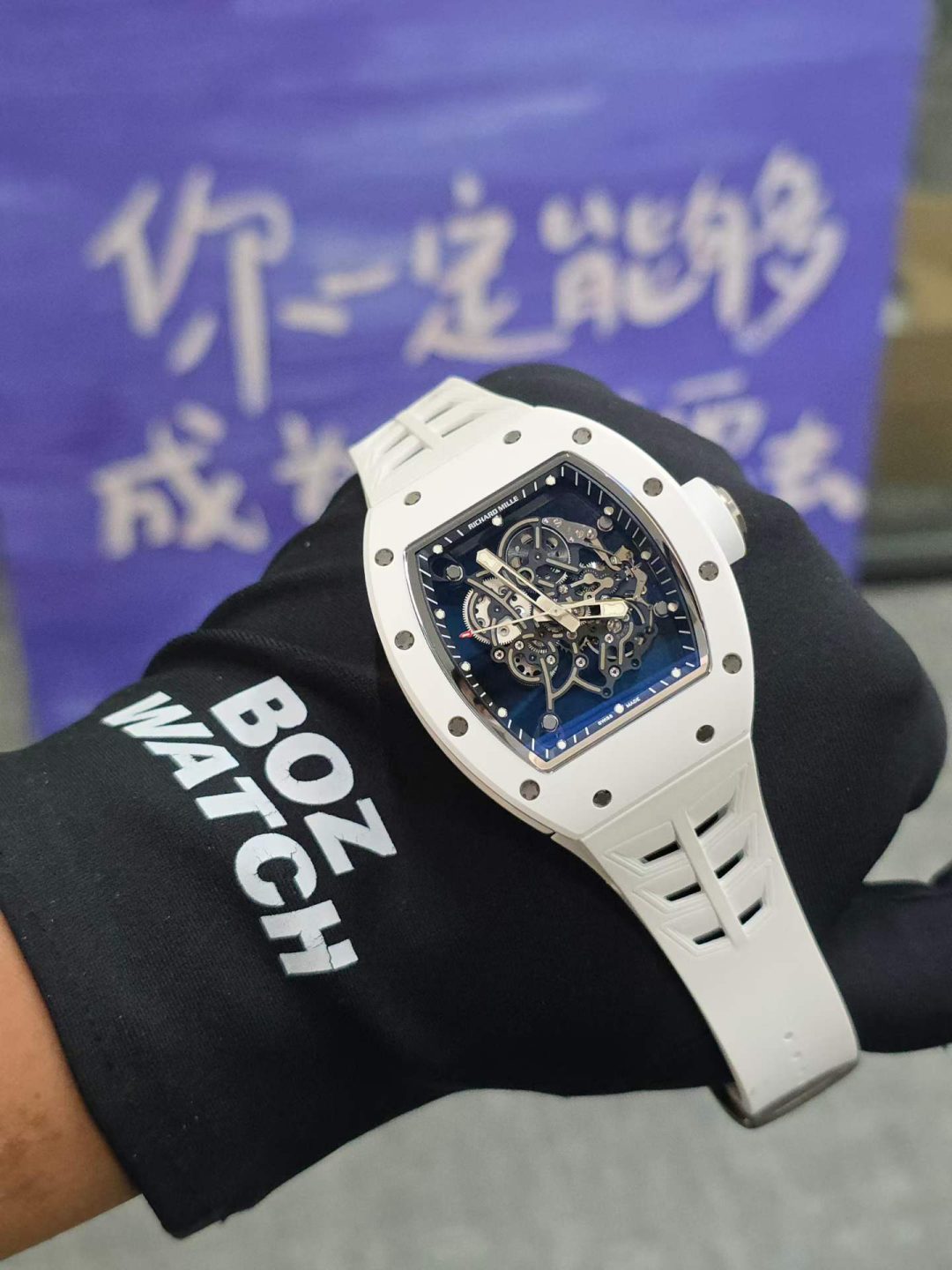
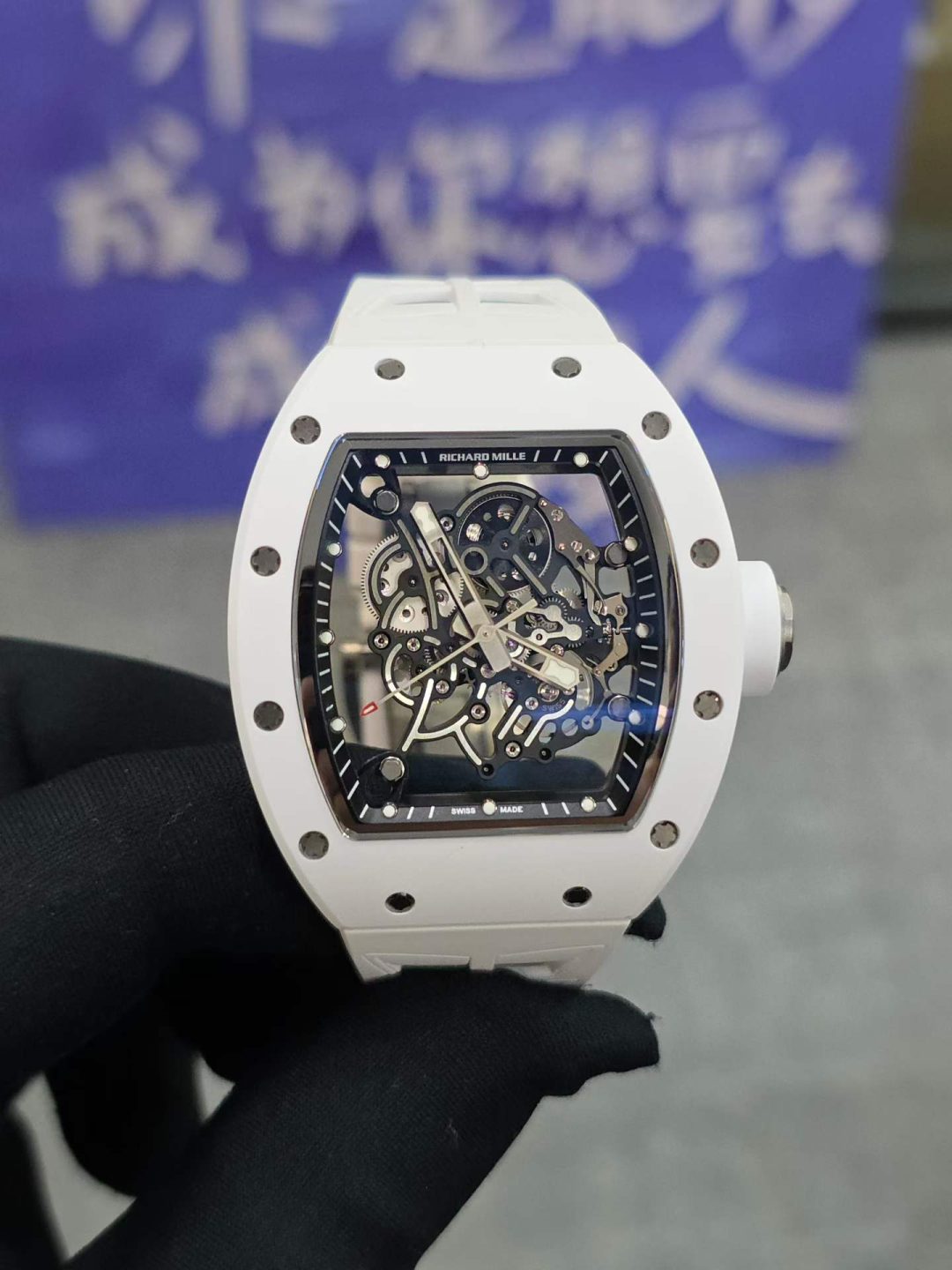
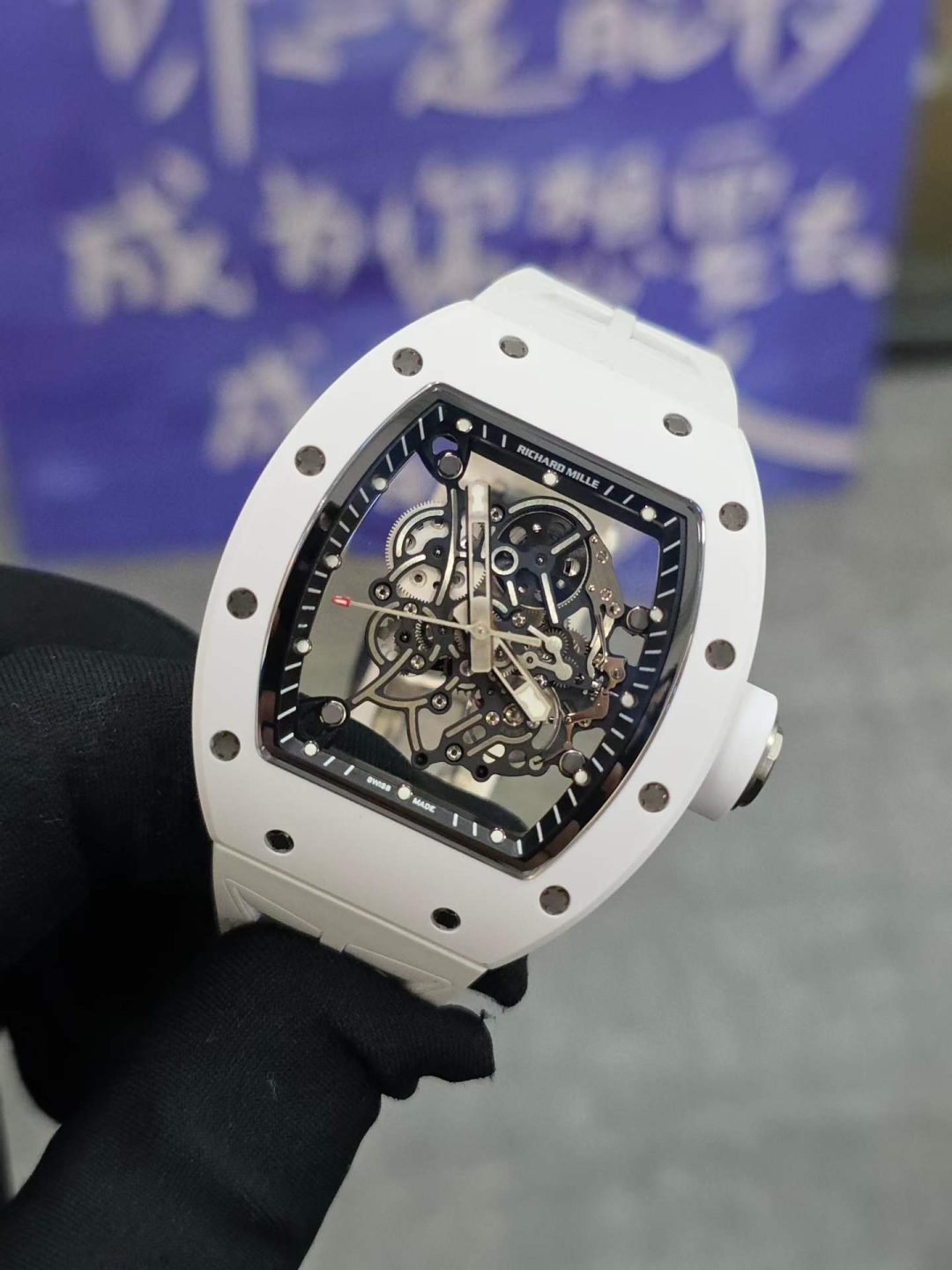
Summary of Key Points about Modified Richard Mille (Model RM055) – Movement Comparison
Based on the latest video transcript (focusing on Richard Mille RM055 modifications), here are the essential features and differences between the two mainstream movement options.
1. Watch Model & Context
- Model: Richard Mille RM055 (Bubba Watson / “Hummer” style)
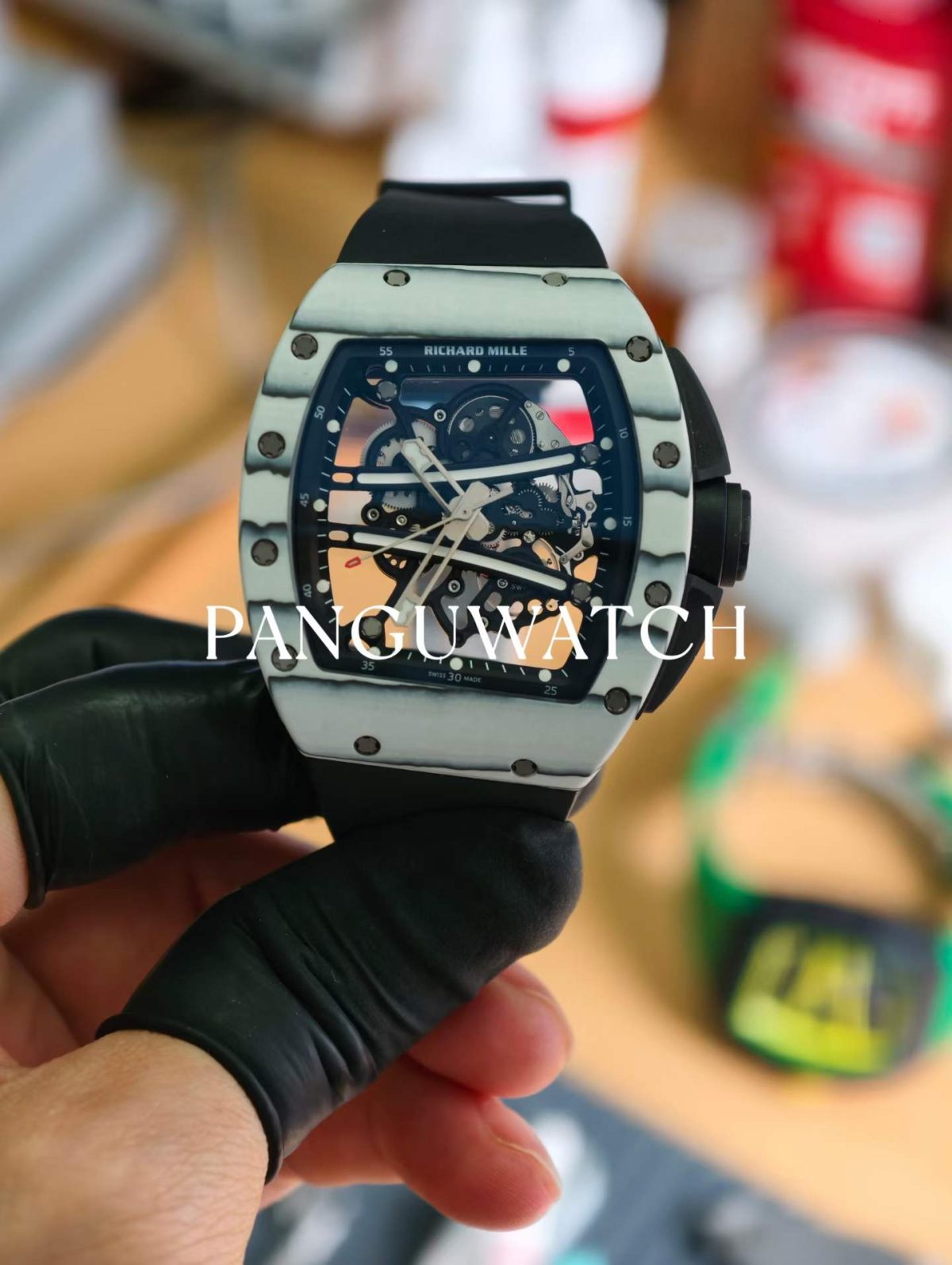
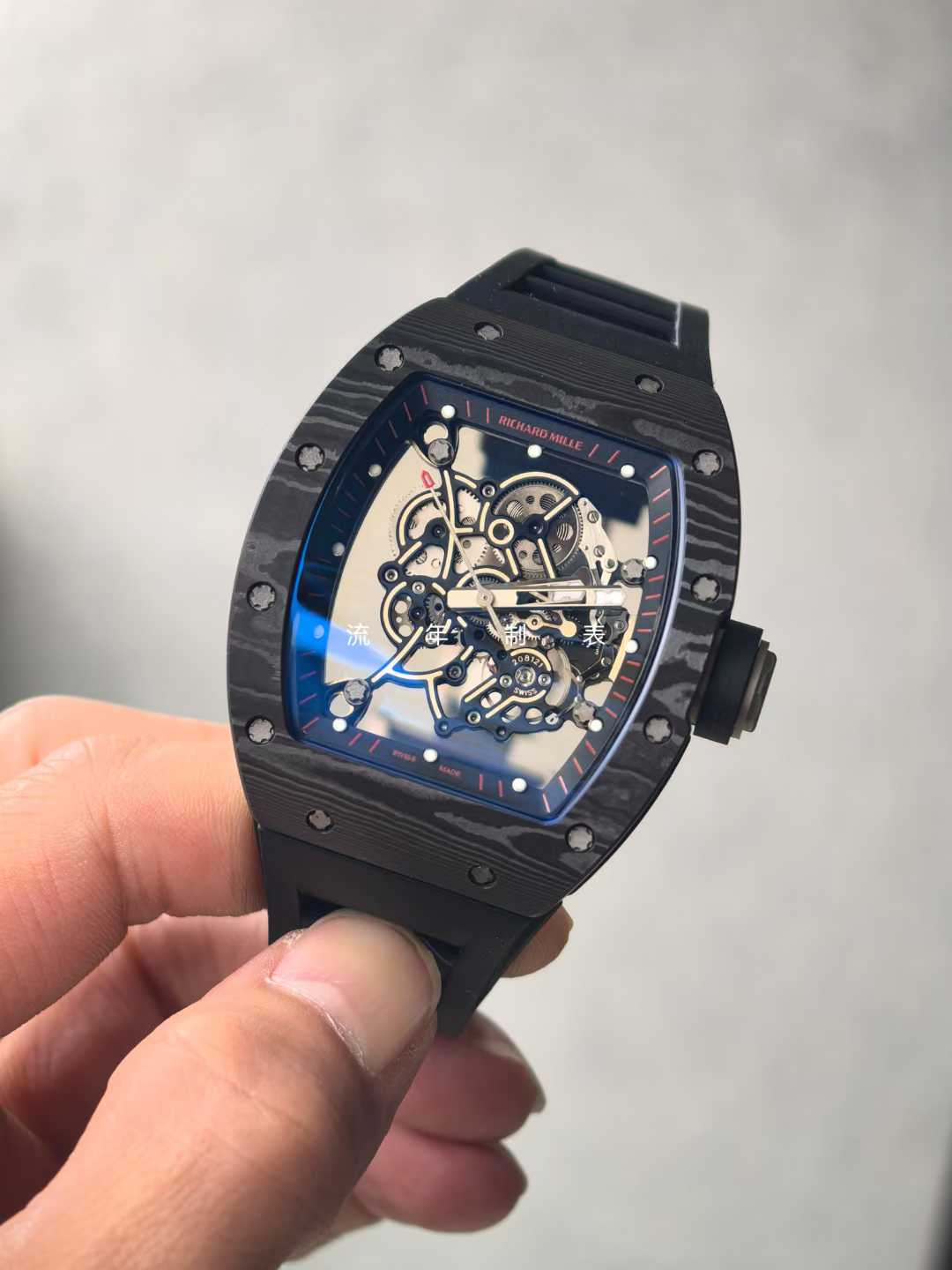
- Two watches shown: left – white ceramic modified with a “water movement” (domestic); right – modified with a Parmigiani Fleurier caliber (higher quality)
- Approach: modified custom watches are made according to budget – cost‑effective vs. perfection
2. Origin of the Parmigiani Movement for RM055
- The original RM055 does not use an in‑house movement; it uses a movement produced by the Parmigiani Fleurier movement factory
- Key components that are interchangeable with original Parmigiani parts:
- Two barrels (at 10 o’clock and 12 o’clock) – spring cases
- Escapement (at 5 o’clock)
- Shock absorber
- Puller / setting lever (2‑3 o’clock area)
- Non‑regulated device (free‑sprung balance) with balance weights
- Modification method: source original genuine Parmigiani components, disassemble them, then customize a titanium alloy skeleton (hollowed structure) to achieve a look nearly identical to the original
3. Comparison: Parmigiani Caliber vs. “Water Movement” (Domestic)
| Feature | Parmigiani Caliber (Right / Premium) | Water Movement (Left / Cost‑Effective) |
|---|---|---|
| Spring barrels (10‑12 o’clock) | Double‑layered treatment; silver central axis – very 3D and prominent | No central axis; has a white gemstone (inconspicuous, gray inside) |
| Shock absorber | Correct size – matches original | Smaller shock absorber – easily distinguishable |
| Puller / setting lever (2‑3 o’clock) | Fine shape; polished – very good workmanship | Unrefined; has a sandblasted / pleated appearance (no secondary finishing) |
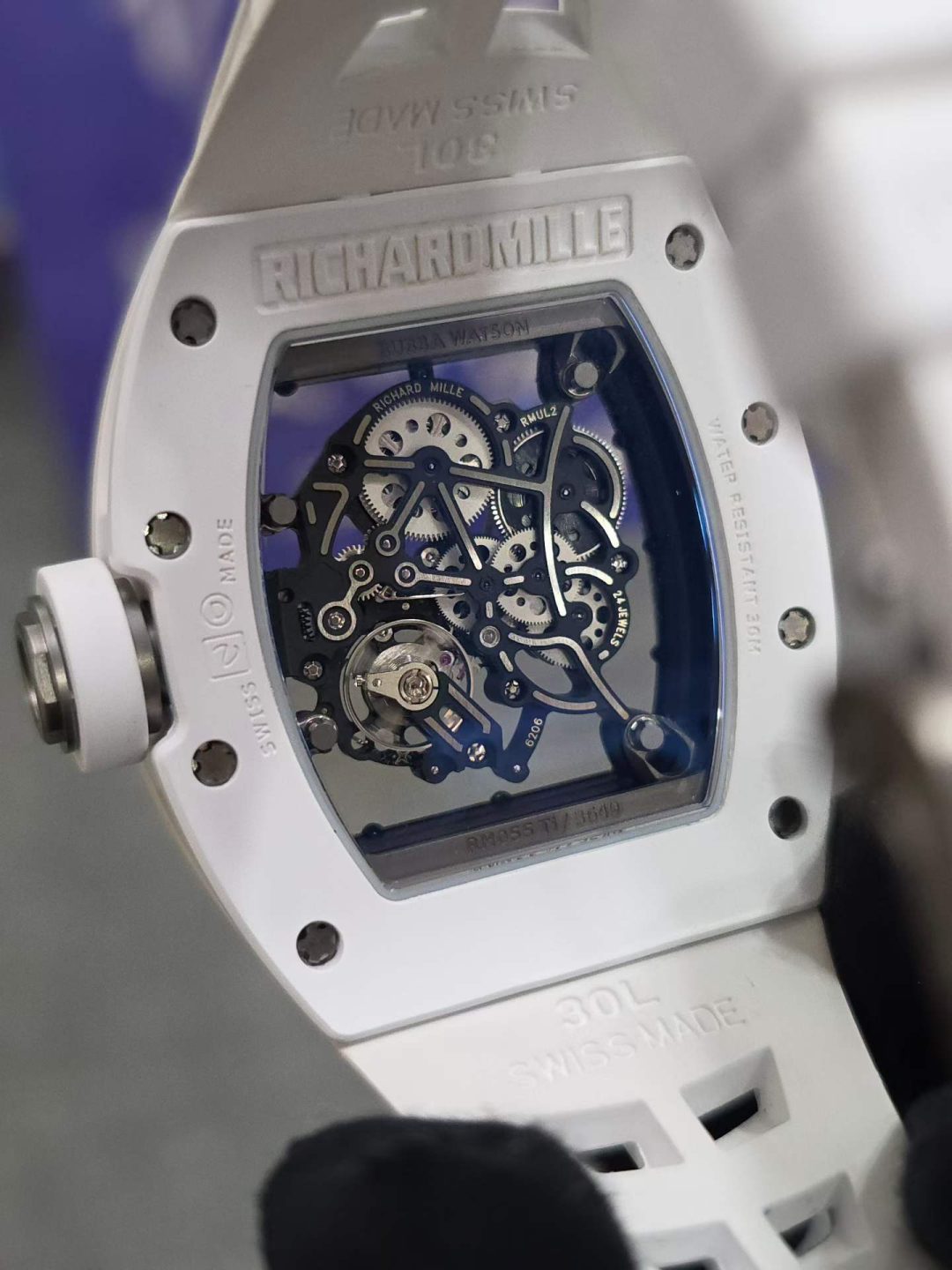
| Non‑regulated device (back) | Sits lower than the outer ring and balance wheel – correct | Made too long, almost parallel to the balance – incorrect |
| Straight second spring (back) | Thin straight second spring – correct | Thick straight second spring – wrong |
| Gear finishing (back) | All gears have secondary finishing; screws are very 3D and solid | Lacks secondary finishing; appears unrefined |
| Overall similarity | Almost identical to original – no issues unless professionally tested | Noticeable differences under close inspection (color, axis, finishing) |
4. Case Construction – “Titanium‑Coated Rubber Case”
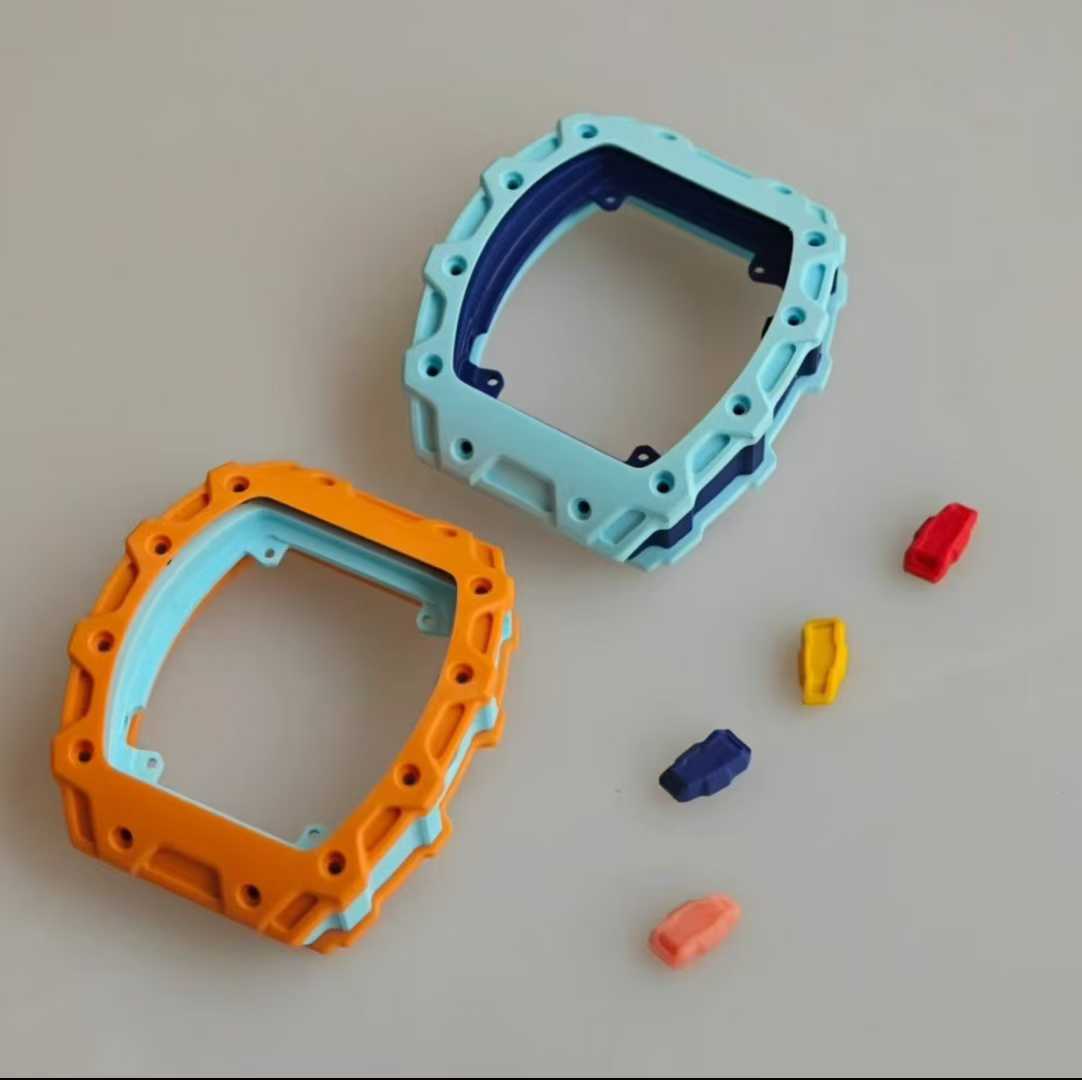
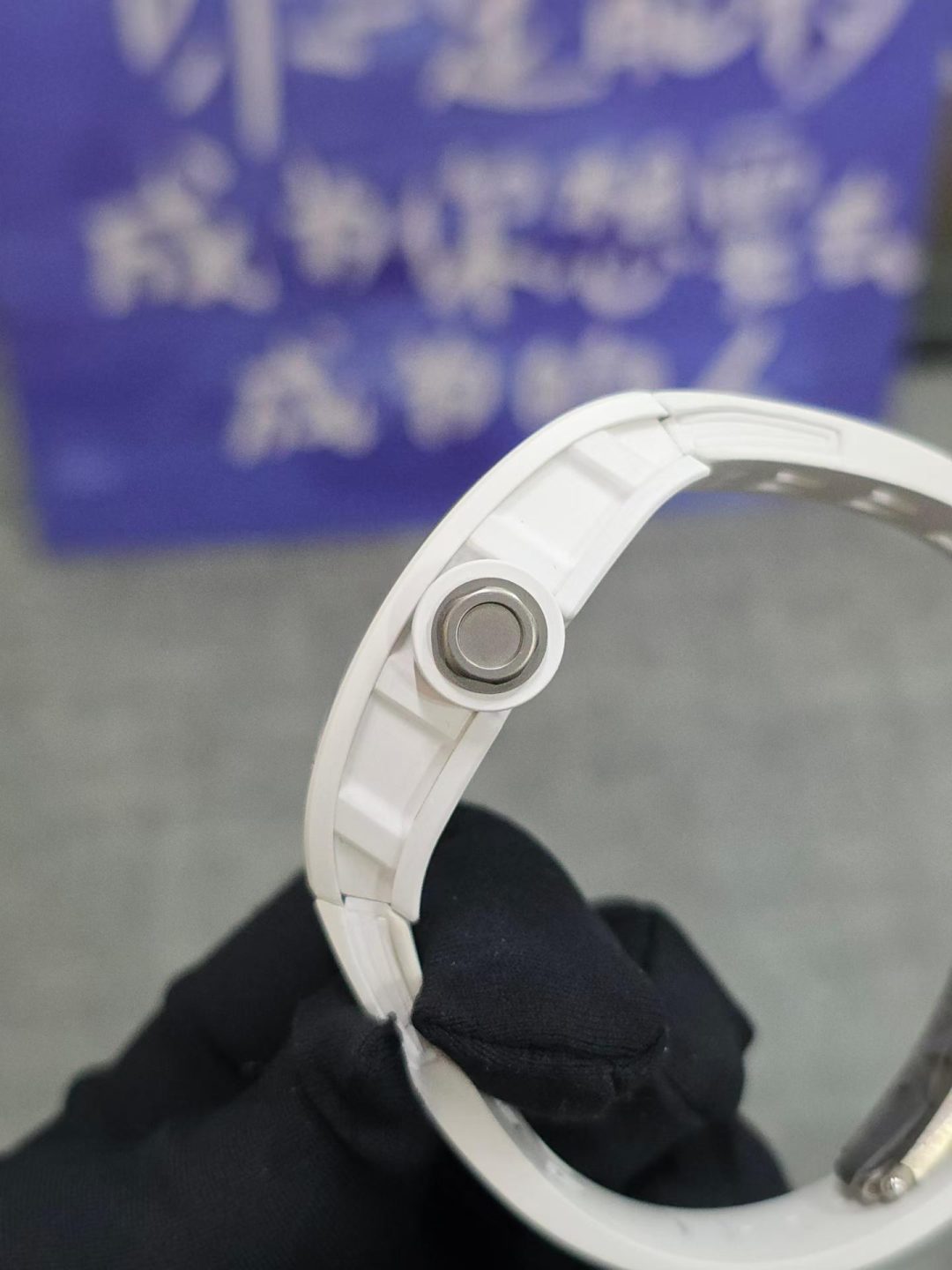
- Developed using original data – imported titanium‑coated rubber case
- Structure: Only the top cover is ceramic; the side and bottom covers are titanium alloy wrapped with a layer of fluororubber (Viton)
- Weight: Watch head alone ~50 grams; total watch weight ~80‑90 grams – very close to the original
- The case is described as “really good” – same case for both watches; only the movement differs
5. Recommendations
- If you pursue perfection and want to “do it once and for all” → choose the Parmigiani caliber (premium)
- If you pursue cost‑effectiveness and just want to wear it → choose the “water movement” (domestic)
6. Key Quality Checklist for Modified RM055
| Component | What to Look For (Premium / Parmigiani) | Inferior Signs (Water Movement) |
|---|---|---|
| Spring barrels (10‑12 o’clock) | Double‑layered; prominent silver central axis | White gemstone, no central axis, grayish |
| Shock absorber | Correct size | Smaller size |
| Puller lever (2‑3 o’clock) | Fine shape, polished | Sandblasted/pleated, unrefined |
| Non‑regulated device (back) | Lower than balance wheel, correct length | Too long, parallel to balance |
| Straight second spring (back) | Thin | Thick |
| Gear finishing (back) | Secondary finishing, 3D screws | Unrefined, no secondary finishing |
| Case | Ceramic top + Ti alloy + fluororubber – weight ~80‑90g | Same case (good) |
| Overall movement appearance | Hard to distinguish from original without lab | Easily spotted by trained eye |
Concluding Comment
This video provides a detailed side‑by‑side comparison of two movement builds for the Richard Mille RM055. The key revelation is that the original RM055 uses a movement from Parmigiani Fleurier, not an in‑house Richard Mille caliber. Therefore, the best way to achieve a faithful modification is to source genuine Parmigiani components (barrels, escapement, shock absorber, setting lever, non‑regulated balance) and assemble them into a custom titanium skeleton. This yields a movement that is virtually indistinguishable from the original unless professionally tested.
Strengths of the Parmigiani build:
- Uses real, original Parmigiani parts – not a clone
- Correct double‑layered spring barrels with silver central axes (vs. white gemstone on domestic)
- Correct shock absorber size (vs. smaller)
- Correct non‑regulated device position (lower than balance, not parallel)
- Thin straight second spring (vs. thick)
- Gears with secondary finishing, solid 3D screws (vs. unrefined)
- Polished puller lever (vs. sandblasted)
Weaknesses of the “water movement” (domestic):
- No central axis on barrels – instead a white gemstone (wrong)
- Smaller shock absorber
- Non‑regulated device too long (parallel to balance)
- Thick second spring
- Poor gear finishing (sandblasted/pleated)
- Unrefined puller lever
Case:
Both watches share the same good quality case – ceramic top, titanium alloy side/bottom with fluororubber coating. Weight (~80‑90g total) is close to genuine, which is important for Richard Mille (known for lightweight materials).
Verdict:
For collectors who want a high‑end modified RM055 that will pass close inspection, the Parmigiani caliber build is the clear choice. It is expensive (genuine Parmigiani parts cost significant money) but achieves near‑perfect movement authenticity. The “water movement” is a budget alternative that looks similar at a glance but has multiple obvious tells (barrel design, shock absorber size, finishing) for anyone who knows the original. Bozhong’s detailed comparison – spring barrel central axis, shock absorber size, height of the non‑regulated device, thickness of the second spring, and gear finishing – provides an excellent checklist for buyers. As always, independent verification of the movement components (genuine Parmigiani vs. clone) is recommended. For those who prioritize perfection, the premium build is worth the investment; for casual wear at a distance, the cost‑effective version may suffice. This video is a valuable guide for anyone navigating the complex world of Richard Mille modifications.
Hello everyone, this is Bozwatch Watch Talk.
Every watch is a work of art, a testament to time, and I am a fanatic believer in them. I also hope to help watch enthusiasts avoid pitfalls and find my own “Bole” (discerning patron).
According to a fan’s request, they wanted me to share how to modify and upgrade the Richard Mille RM055 – how to play with it, and which choice is good.
In fact, the way to play with modified custom watches depends on everyone’s budget. If you pursue cost‑effectiveness, you can choose a cheaper movement. If you pursue perfection, you can choose a more expensive movement.
The mainstream modifications of the RM055 on the market are mainly divided into two types of movements:
- The “water movement” (generic movement)
- The Parmigiani Fleurier caliber
For the two watches in my hand – the white ceramic on the left is an RM055 modified and upgraded with a standard movement. The one on the right is a modified custom watch with a Parmigiani movement.
First, from a general appearance, these two movements look almost the same, right? Their gear structure, skeletonization level, and functions are actually completely the same. So what’s the difference? The difference lies in the details.
Let’s take a look.
We’ve talked about the Parmigiani caliber before. There are some factories on the market that make movements imitating the details of the Parmigiani. So how can we distinguish a genuine Parmigiani caliber? What does it look like?
First, before we play with this watch, we must know what the original looks like. Why use the Parmigiani Fleurier movement for modification? Because the original RM055 movement is not self‑produced by Richard Mille – it is produced by the Parmigiani Fleurier movement factory.
For example:
- The two barrels at 10 o’clock and 12 o’clock (two spring barrels)
- The escapement at 5 o’clock
- The shock absorber
- The ratio of the puller in this area
- The free‑sprung (non‑caliber) device on the back and the balance weights
These components are actually interchangeable with original Parmigiani parts – they are universal. So we can find original genuine Parmigiani calibers on the market, disassemble some of their components, and then customize a titanium alloy skeleton and a skeletonized structure. This can achieve results almost identical to the original.
For the modification of the Parmigiani movement, as long as you don’t send it to professional institutions for testing, there will be no problems.
But what does the generic “water movement” look like? This is not the original Parmigiani – it uses domestic components. You can spot the differences.
At 10 o’clock:
- First, the color of the spring is different.
- The effect of the central axis inside is different.
Let me show you. The real Parmigiani movement has a double‑layered treatment – a silver central axis in the middle, very three‑dimensional and prominent. Each bearing has such a central axis. See? But the generic movement does not have such a central axis – it has a white gemstone, very inconspicuous, grayish inside. See? This difference is actually very obvious.
Another point – look at the Parmigiani’s puller plate in the 2 o’clock area or the 3 o’clock area – the craftsmanship is very fine. Both its shape and polishing are excellent. See? On the generic movement, from the side, it seems not to have been finished a second time – it has a wrinkled, sandblasted look – clearly wrong.
The size of the shock absorber is also different. This is an original Parmigiani shock absorber – its size matches the genuine exactly. The generic one has a smaller shock absorber. See? That’s also easy to distinguish.
Moving to the back – look at the movement structure. The real Parmigiani movement has a free‑sprung (non‑caliber) device that sits lower than the outer ring and the balance wheel. On the generic movement, the regulator is made too long – almost parallel to the balance wheel – that’s not correct.
Also, look at the thickness of the straight seconds spring on the back. The Parmigiani has a thin straight seconds spring. The generic movement has a thick one. Easily distinguished.
The gear craftsmanship on the back of the Parmigiani is much better. Whether at 12 o’clock, 1 o’clock, or 3 o’clock, the gear screws have all been finished twice – very three‑dimensional and solid. Look at the central axis or the 1 o’clock position – this is also a clear distinction.
For modified custom watches like this, there are many movements on the market for you to choose from.
- If you pursue perfection and want to do it once and for all, I suggest you choose the Parmigiani movement.
- If you pursue cost‑effectiveness and just want to wear it, you can choose the generic movement.
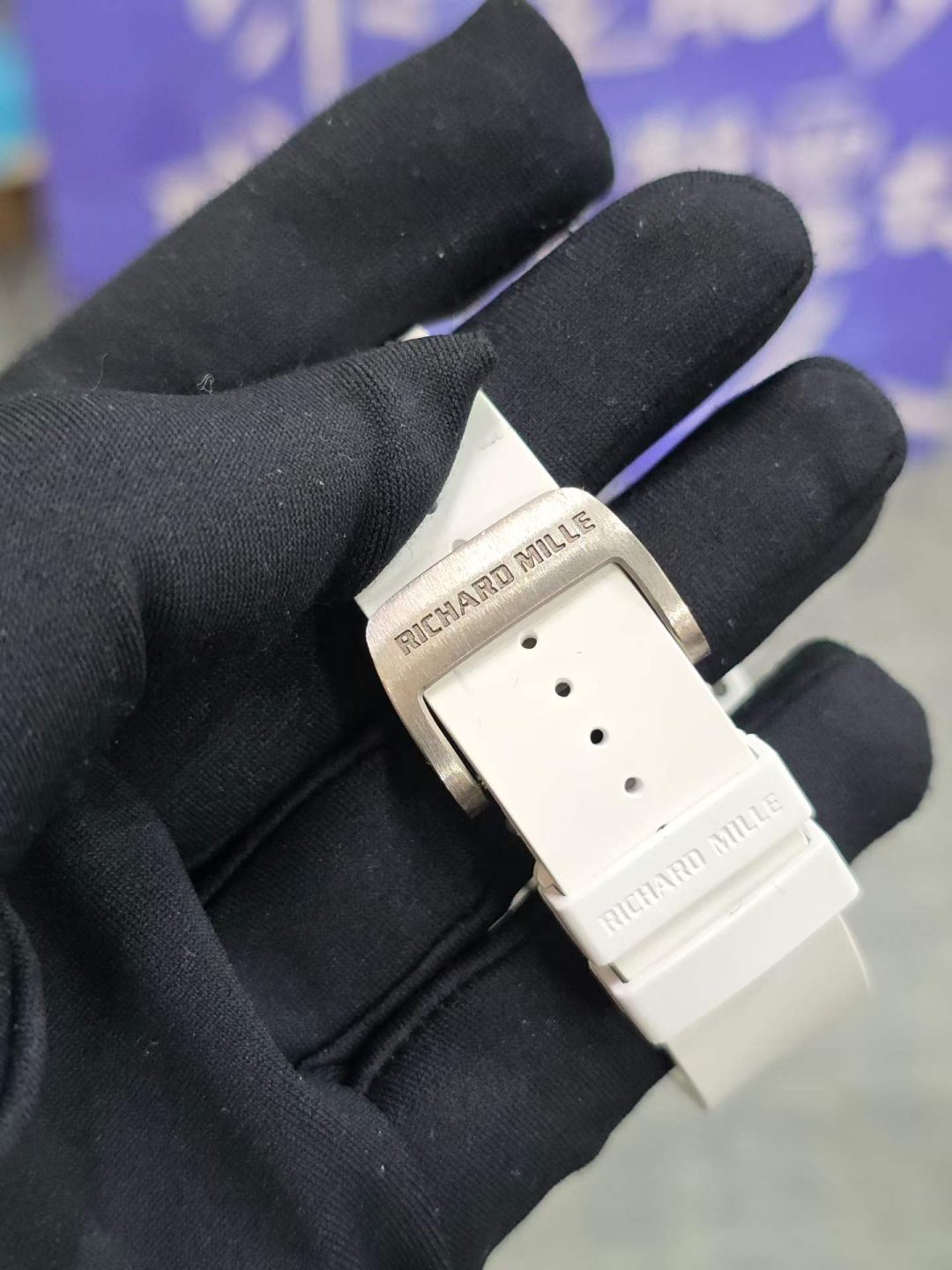
To be more specific: both of these watches have really good cases. Using original data, we developed an imported titanium‑coated rubber case. What does “titanium‑coated” mean? Only the bezel is ceramic; the side and caseback are made of titanium alloy and then wrapped with a layer of fluoro rubber (FKM). So this kind of watch is relatively light. The watch head alone weighs only about 50 grams, and the entire watch weighs nearly 80–90 grams – very close to the original.
This is a simple watch sharing of a modified Richard Mille RM055. When choosing, you must carefully distinguish good from bad.
Today’s Bozwatch Watch Talk ends here. If you like Bozwatch’s videos, please double‑tap to like and follow. See you next time.