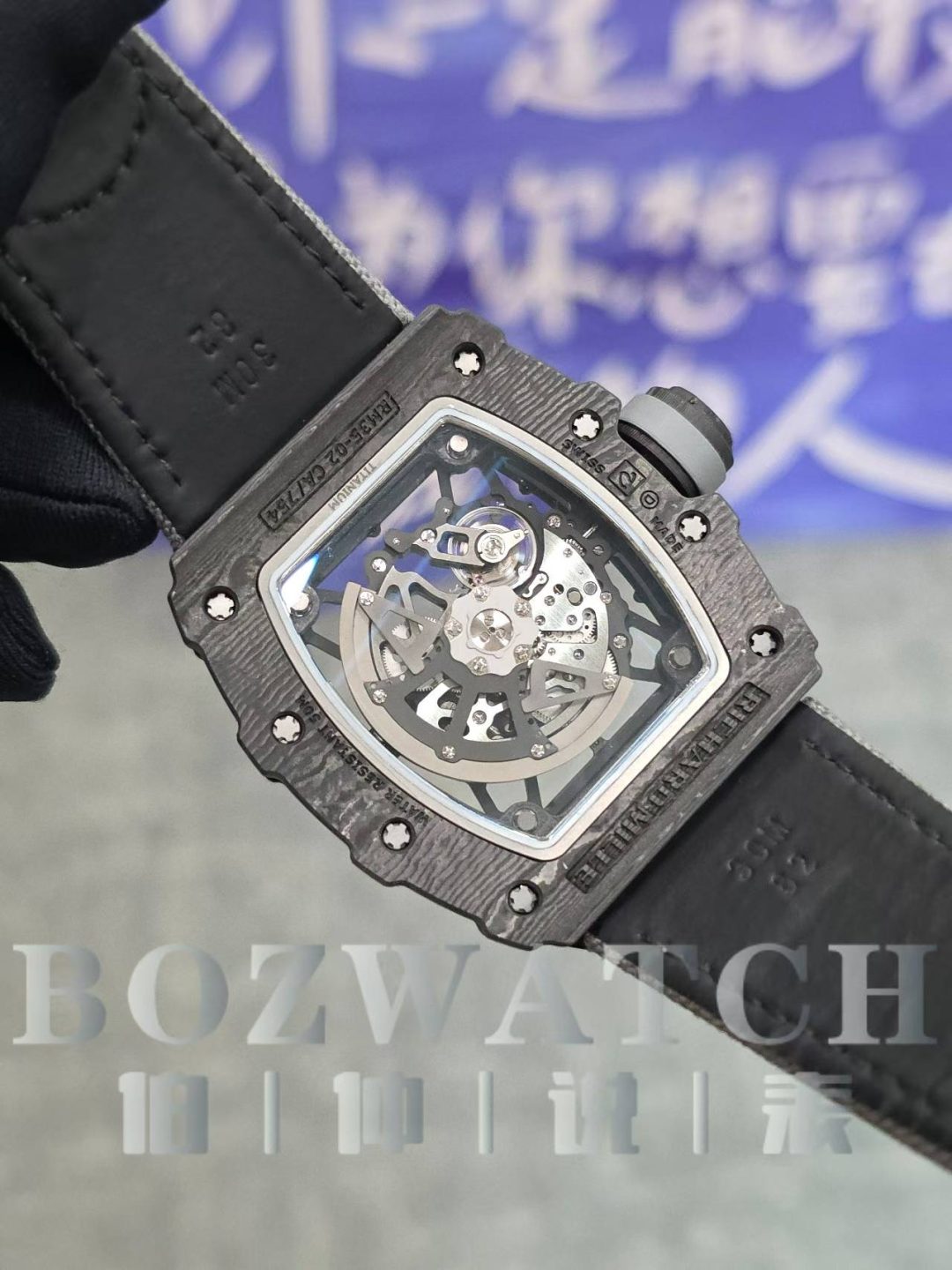
Summary of Key Points about Richard Mille Modified Movements – Full Parmigiani vs. Semi‑Parmigiani
Based on the latest video transcript (focusing on RM modified movements), here are the essential differences between the two main types of Parmigiani‑based movements.
1. Two Types of Modified Parmigiani Movements
- Full Parmigiani movement (left on screen)
- Semi‑Parmigiani movement (right on screen)
- Both use original Parmigiani parts for the spring barrels (10 & 12), puller area, and other key components.
2. Key Difference – Balance Wheel & Shock Absorber
- Full Parmigiani: Uses an original balance wheel and original shock absorber – these parts have chamfering and polishing.
- Semi‑Parmigiani: Uses the same size shock absorber but without the chamfering and polishing. Under high magnification, the difference is subtle.
- Price difference between the two is tens of thousands of yuan.
3. Similarities Between Full & Semi‑Parmigiani
- Front sides are completely consistent – spring barrel structure, skeletonization level, shock absorber size, movement polishing – all can be completely unified.
- Both use original parts for the spring barrels and puller area.
4. Full Parmigiani – Additional Details
- Spring barrel color: left (silver titanium), right (ecological). Under light, they reflect strong luster and texture.
- Central shaft is double‑layered, very three‑dimensional with a silver central axis – visible on every gear (front and back).
- Back bearings are very three‑dimensional – domestic die‑cast movements cannot achieve this.
- Automatic rotor uses an original bearing – back has three colors (dark inner, lighter outer). Market rotors are darker – easy to distinguish.
- Titanium alloy parts and brushed surfaces are very well finished – domestic movements cannot match.
5. Semi‑Parmigiani – Value Proposition
- The subtle differences (lack of chamfering/polishing on balance wheel) can only be distinguished under a magnifying glass.
- From the front, you cannot tell the difference.
- Highly recommended for those with limited budget – very cost‑effective.
6. Case – NTPT Carbon Fiber
- Regardless of movement type, the case is made of NTPT carbon fiber.
- Good carbon fiber: strong texture and luster under light; weight consistent with original.
7. Applicable Models
- Semi‑Parmigiani movement can be used in: RM055, RM35-02, RM060, RM35-01 – very cost‑effective modification plans.
- Full Parmigiani is for those who pursue perfection and want to “do it once and for all”.
8. Key Quality Checklist for Parmigiani Movements
| Feature | Full Parmigiani | Semi‑Parmigiani |
|---|---|---|
| Spring barrels (10/12) | Original parts, correct color | Original parts, correct color |
| Shock absorber size | Large, correct | Large, correct |
| Balance wheel | Original, chamfered & polished | Same size, no chamfer/polish |
| Central shaft | Double‑layered, silver axis | Double‑layered, silver axis |
| Back bearings | Very 3D | Very 3D |
| Automatic rotor bearing | Original, 3‑color | (Not specified – likely similar but with domestic bearing) |
| Finishing | Superior – chamfered, polished | Very good but lacks final polish on balance |
| Price | Higher (tens of thousands more) | Lower (cost‑effective) |
| Best for | Perfectionists, one‑time purchase | Budget‑limited, still excellent |
Concluding Comment
This video provides a clear, practical guide to distinguishing between the two types of Parmigiani‑based modified RM movements available on the market: full Parmigiani and semi‑Parmigiani. Both use original Parmigiani parts for the spring barrels and puller area, and both share the same front appearance, skeletonization, and shock absorber size. The only difference is the balance wheel and shock absorber finishing: the full version uses original parts with chamfering and polishing, while the semi‑version lacks that final refinement. Under a magnifying glass, the difference is visible, but from the front, they are indistinguishable.
For budget‑conscious buyers: The semi‑Parmigiani movement is an excellent cost‑effective choice – it delivers the same front look, same spring barrel action, same skeletonization, and same overall performance, with a subtle detail difference that only magnified inspection reveals. The price saving is tens of thousands of yuan.
For perfectionists: The full Parmigiani movement is the ultimate – original balance wheel and shock absorber, fully chamfered and polished, with additional finishing details like the 3‑color automatic rotor bearing and superior back bearing three‑dimensionality. It is the “do it once and for all” option.
Bozwatch’s emphasis on the subtle differences and the warning against unscrupulous merchants selling domestic molded movements as Parmigiani is valuable. The case (NTPT carbon fiber) is the same for both and should be judged by its texture, luster, and weight consistency. This guide helps buyers make an informed choice based on their budget and desire for perfection. As always, independent verification of the movement is recommended. This is the definitive guide to understanding RM Parmigiani movement tiers.
Hello everyone, this is Bozwatch Reviews.
Every watch is a work of art, a testament to time, and I am a fanatic who is obsessed with them. I also hope that watch enthusiasts can avoid pitfalls and find their own “Bole” (discerning patron).
According to fan requests, they want to know about the current Richard Mille modified movements – how to play with them and how to distinguish them. There are many modified RM movements on the market – many, and they are mixed. Some unscrupulous merchants sell domestic molded movements as Parmigiani movements. Some customers may think that because they look similar, their movements should be similar – but that’s not the case.
The modified movements on the market are only of two types.
- The first type is the one on the left of the host – the fully modified full Parmigiani movement.
- The second type is the one on the right of the host – the modified semi‑Parmigiani movement.
So how can we distinguish between a full Parmigiani movement and a semi‑Parmigiani movement? What’s the difference? I also took some enlarged pictures to show you.
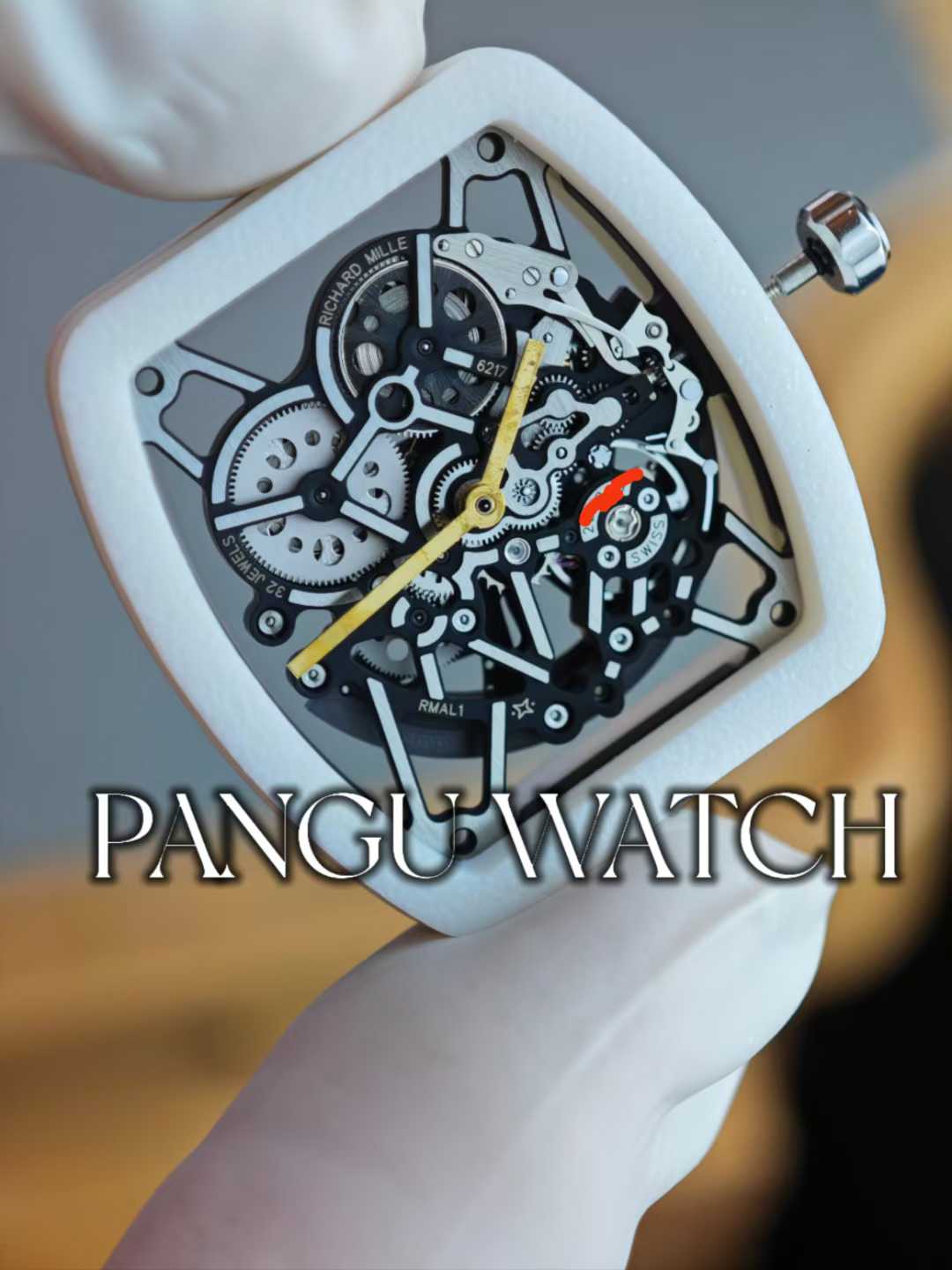
Look at the top image – that’s a full Parmigiani movement’s balance wheel and shock absorber. Below that is a semi‑Parmigiani movement’s balance wheel and shock absorber. You can see that the size of their shock absorbers is actually the same. The only difference is that the full Parmigiani movement uses an original balance wheel and an original shock absorber, which have been chamfered and polished. The semi‑Parmigiani movement does not have this chamfering and polishing. In fact, under high magnification, it’s a very subtle difference.
The price difference between the full and semi‑Parmigiani movements is tens of thousands of yuan. The only difference is the balance wheel. Their front sides are completely consistent – whether it’s the spring barrel structure, the skeletonization level, the shock absorber size, or the movement polishing – all can be completely unified.
Why can the semi‑Parmigiani movement achieve this? Because its spring barrels at 10 and 12 o’clock, and the puller area, are all upgraded with original accessories. The full Parmigiani movement also uses original parts for upgrading, but it has an additional part – the balance shock absorber is also original. That’s the difference between the semi‑Parmigiani and full‑Parmigiani.
Now let’s look at what level the full Parmigiani movement modification can achieve.
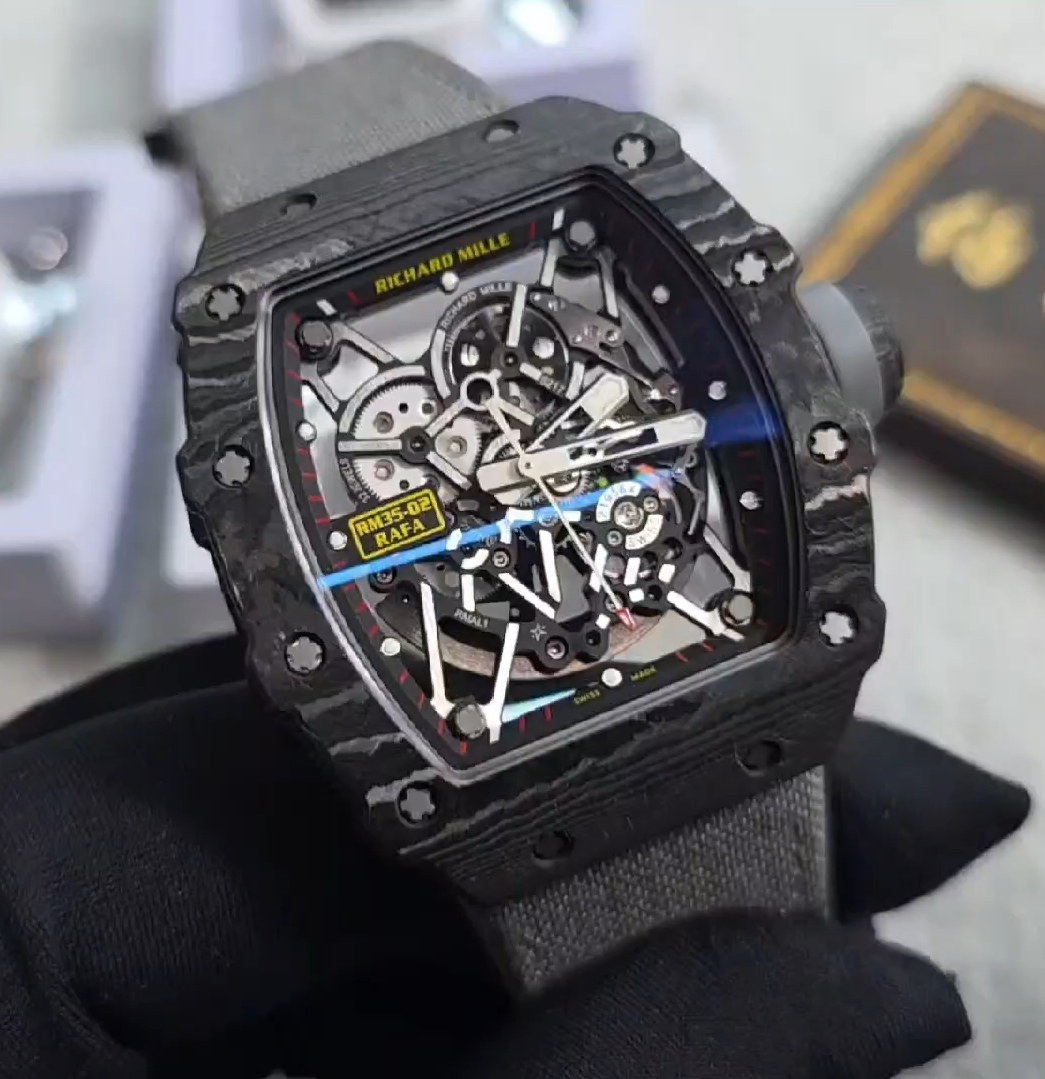
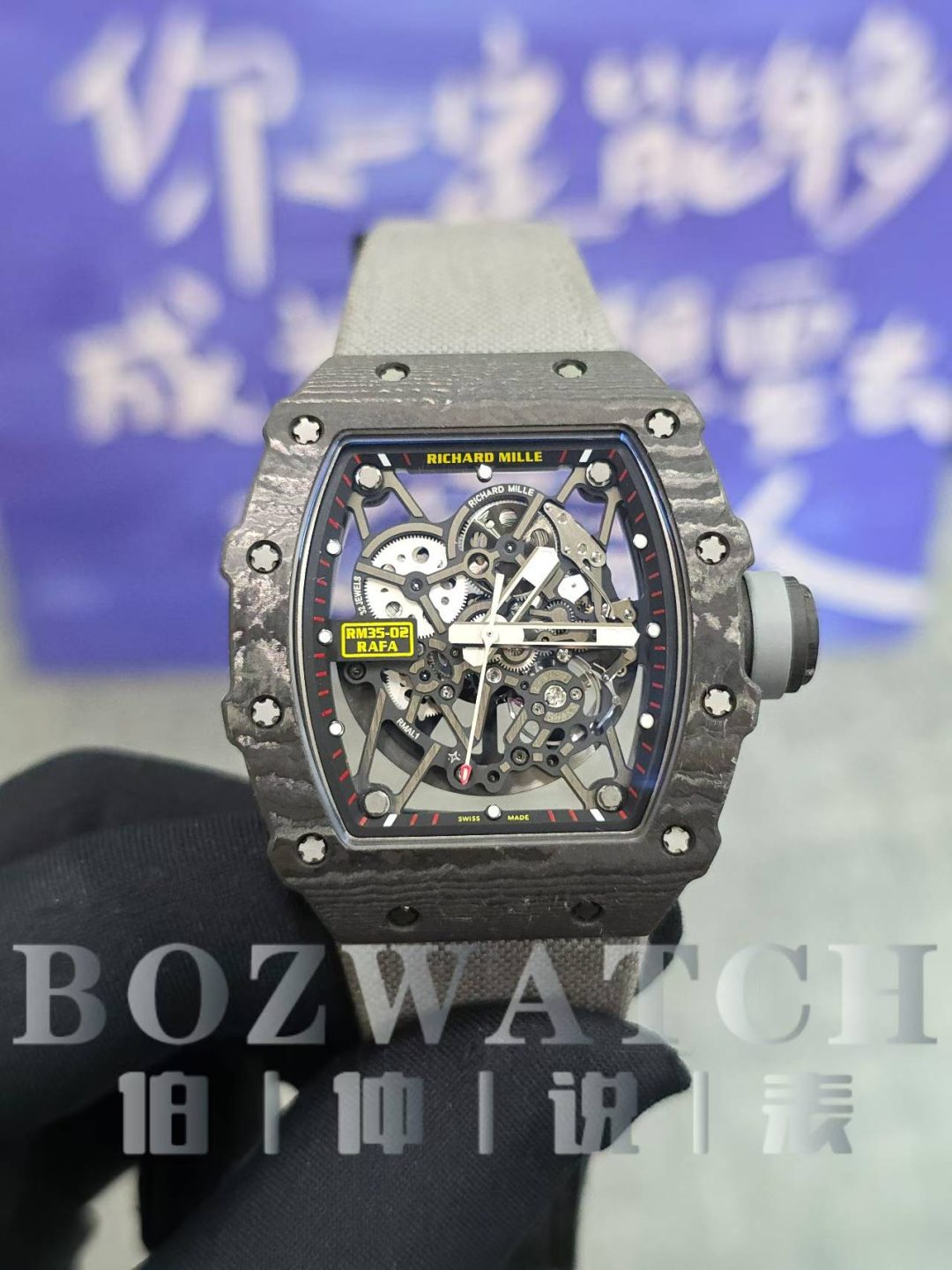
First, before we play with a watch, we must know what the original should look like. For a watch like this, the color of their spring barrels is very particular. The left one is silver titanium, and the right one is ecological. Under light, they reflect a strong luster and texture. The central shaft in the middle is double‑layered, very three‑dimensional and obvious, with a silver central axis. See it? Every gear is like this – whether front or back.
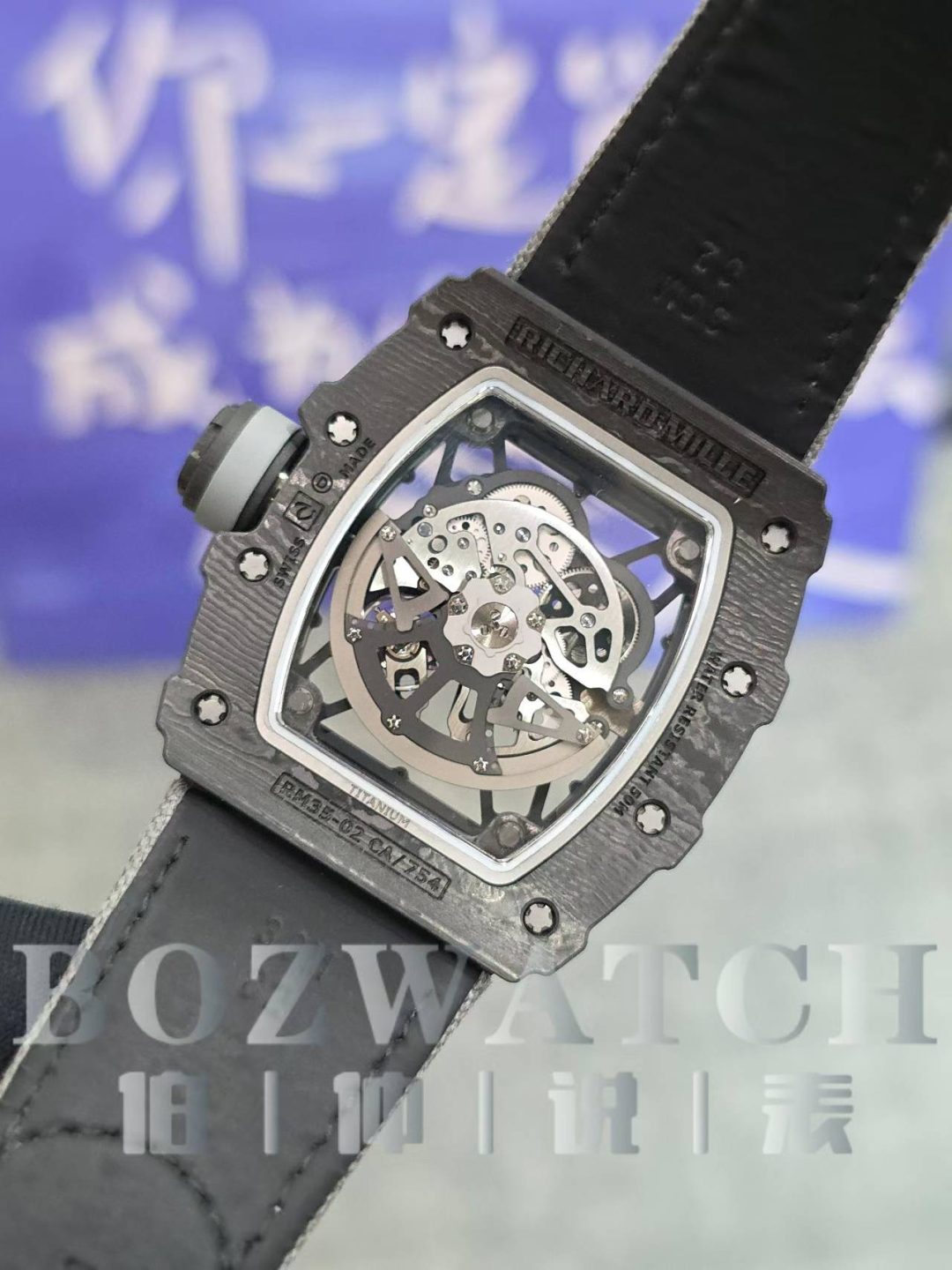
Look at the back of the movement – the bearings are all very three‑dimensional. Domestic die‑cast movements cannot achieve this effect. The brushing in the 1 o’clock area, the pull rod in the 3 o’clock area, and the polishing – all are very particular.
Because the RM35-02 is an automatic movement, it has an automatic rotor. Our automatic rotor is made with an original bearing. The back has different colors – dark tones on the inner part, lighter on the outer ring – three colors in total. See? This color is very easy to distinguish. On market movements, the automatic rotor’s color is darker – completely different. That’s also easy to distinguish.
The movement parts made of titanium alloy and brushed surfaces are handled very well – something domestic movements cannot achieve.
To put it simply, the purpose of modifying watches is to modify, customize, and upgrade – to be as close to the original as possible, so you feel more confident when wearing it. A good movement in a modified watch can achieve a very nice effect.
If your budget is limited, I highly recommend playing with the semi‑Parmigiani movement for the upgrade. The subtle differences can only be distinguished under a magnifying glass. The front and back of the movement, the polishing, and the gear colors are all completely consistent – you can’t tell from the front.
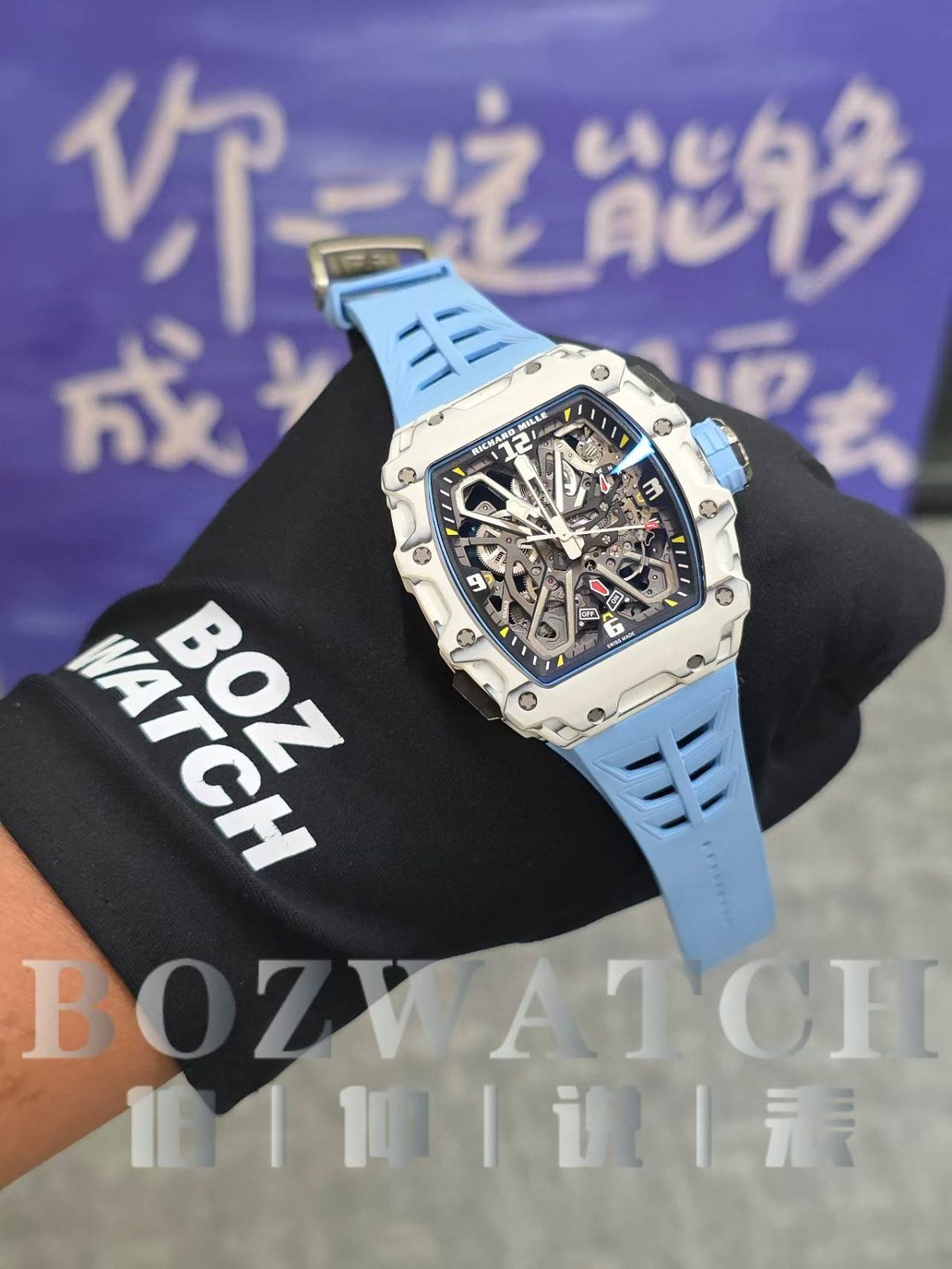
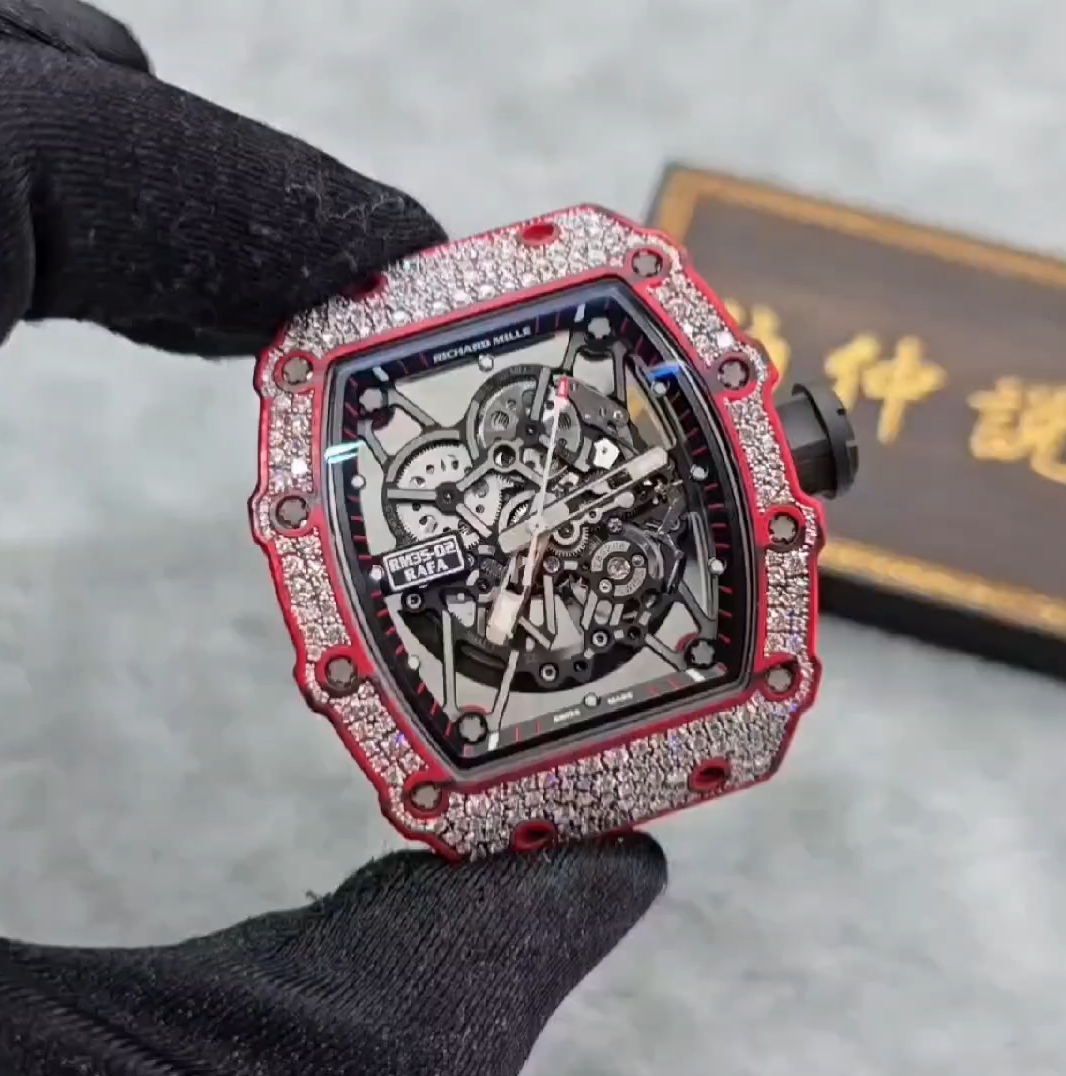
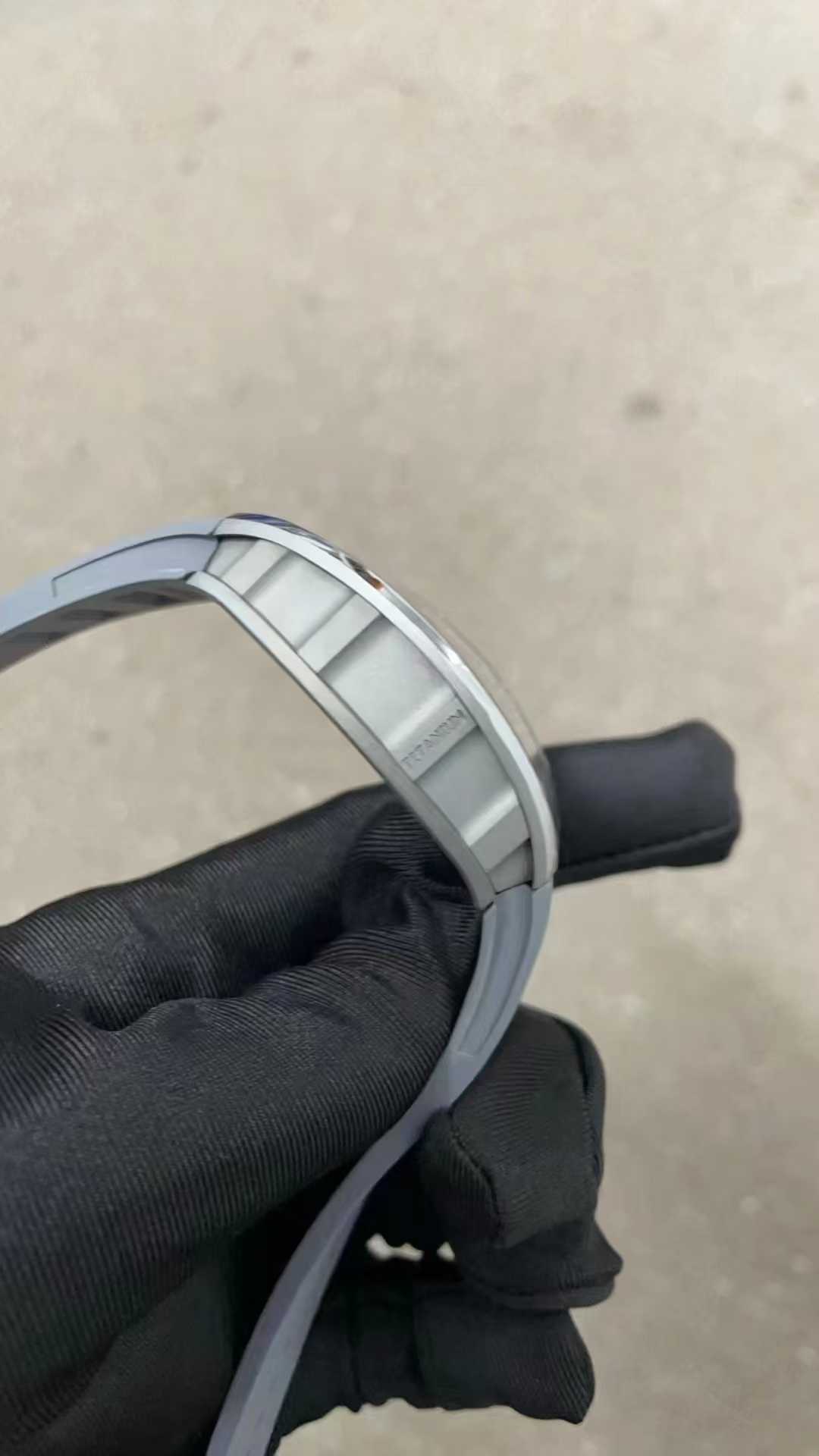
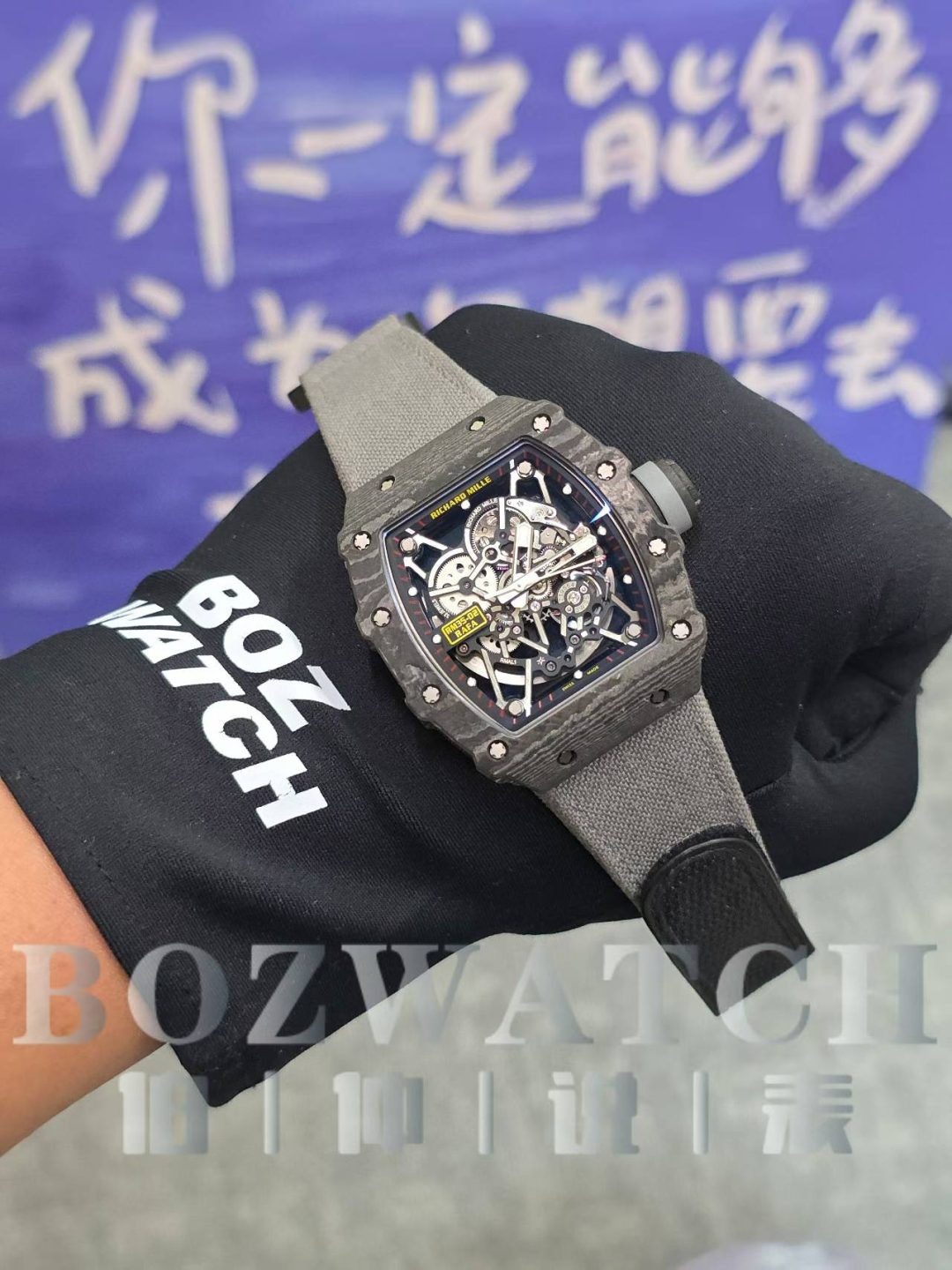
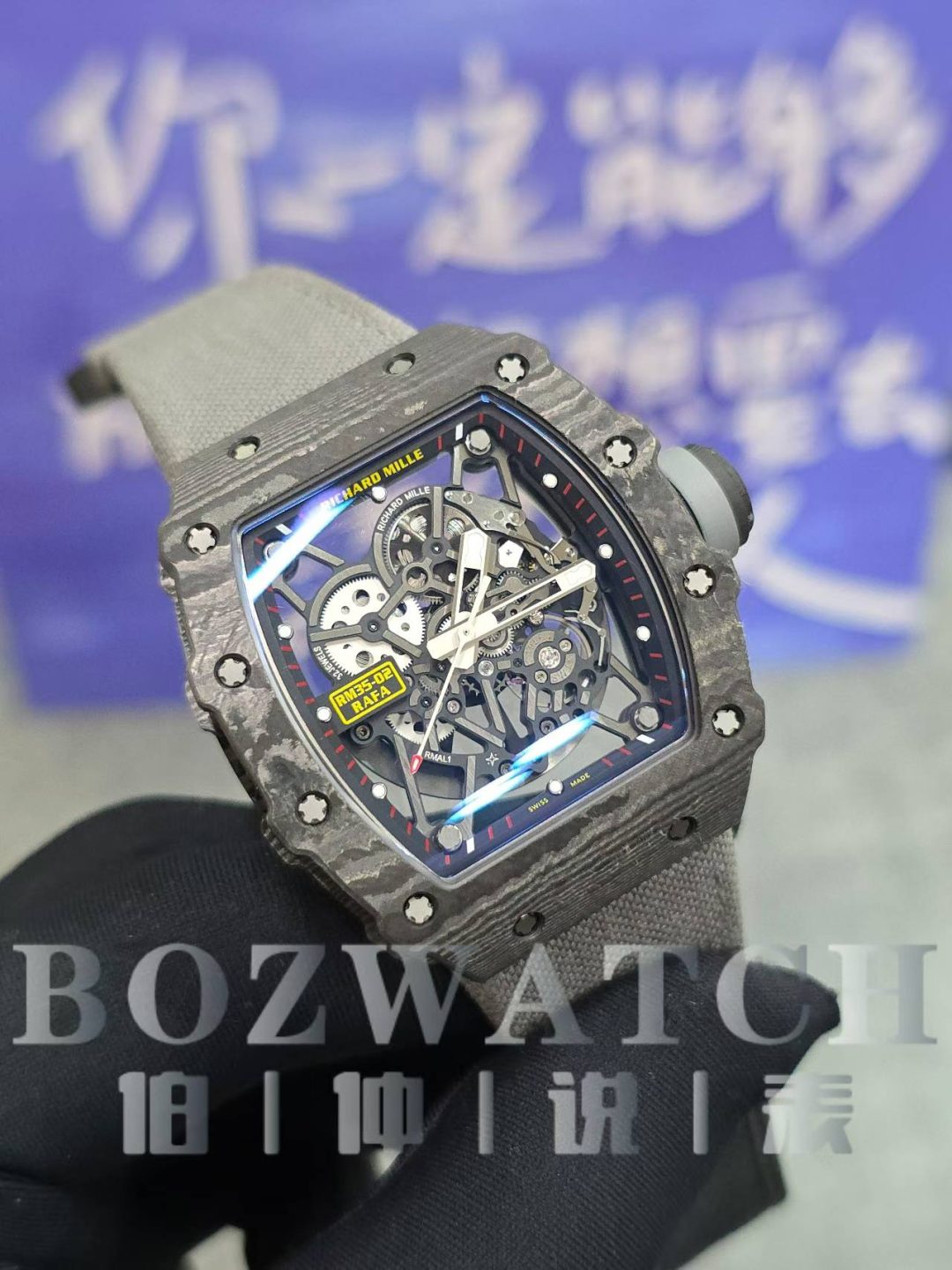
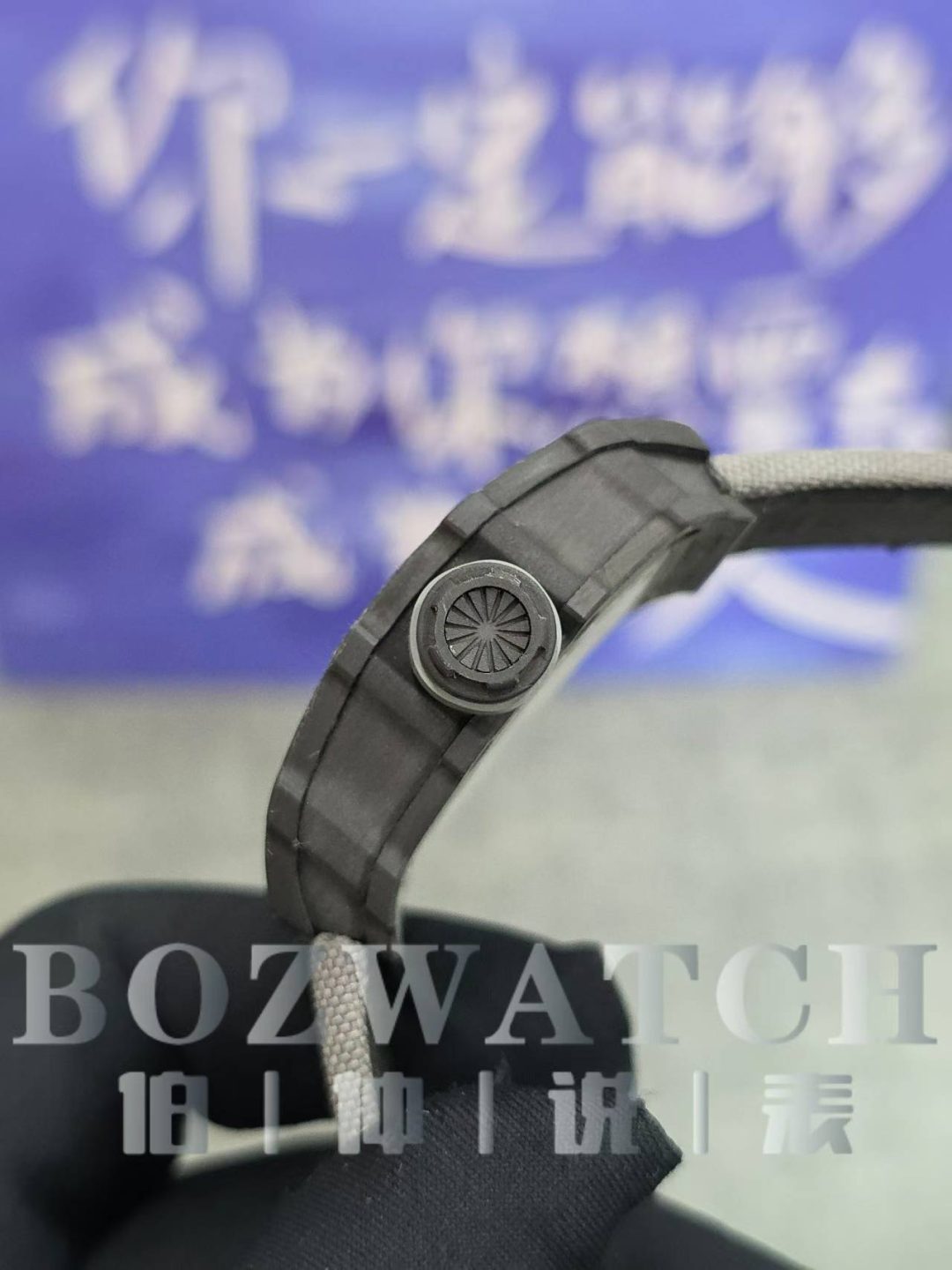
For this watch, the case is made of NTPT carbon fiber. The carbon fiber texture is very important. A good product, under light, has strong texture and luster, and the weight is completely consistent with the original.
This is a simple explanation of the Parmigiani movements – so that everyone can better understand how to play with the Parmigiani Fleurier movements on the market.
The semi‑Parmigiani movement can be used in the RM055, RM35-02, RM060, or RM35-01. These are very cost‑effective modification plans using the semi‑Parmigiani caliber. If you pursue perfection and want to do it once and for all, you can play with the full Parmigiani caliber for modification and upgrade.
This is a simple watch sharing of Parmigiani movements. If you like Bozwatch’s videos, please double‑tap to like and follow. See you next time.