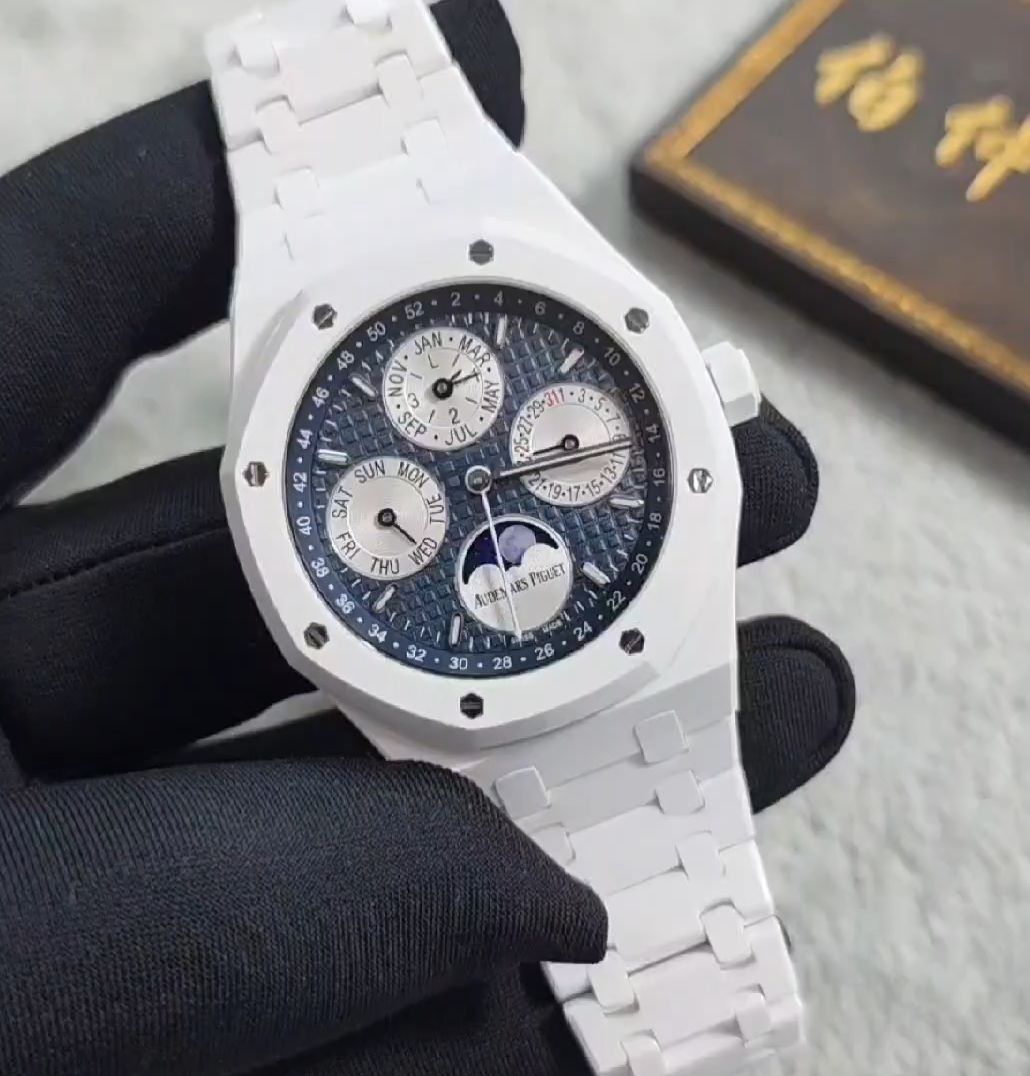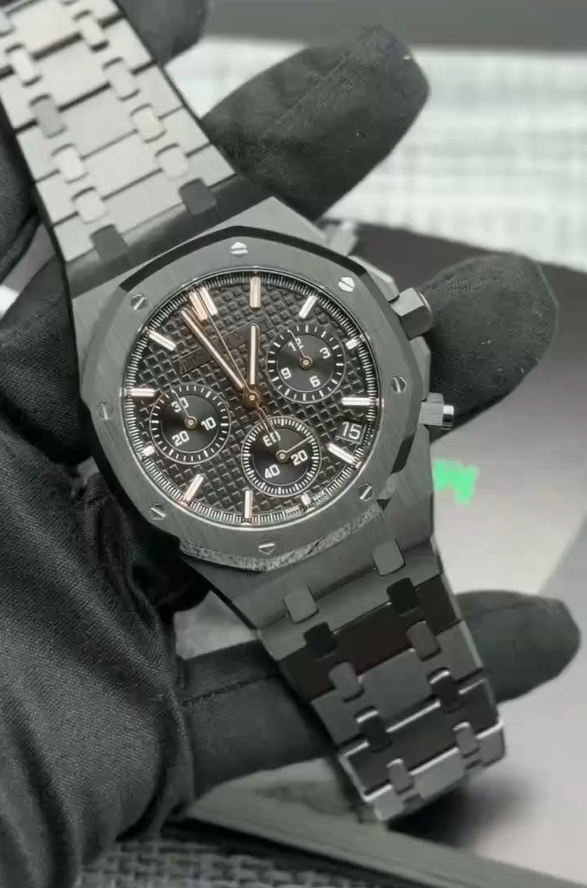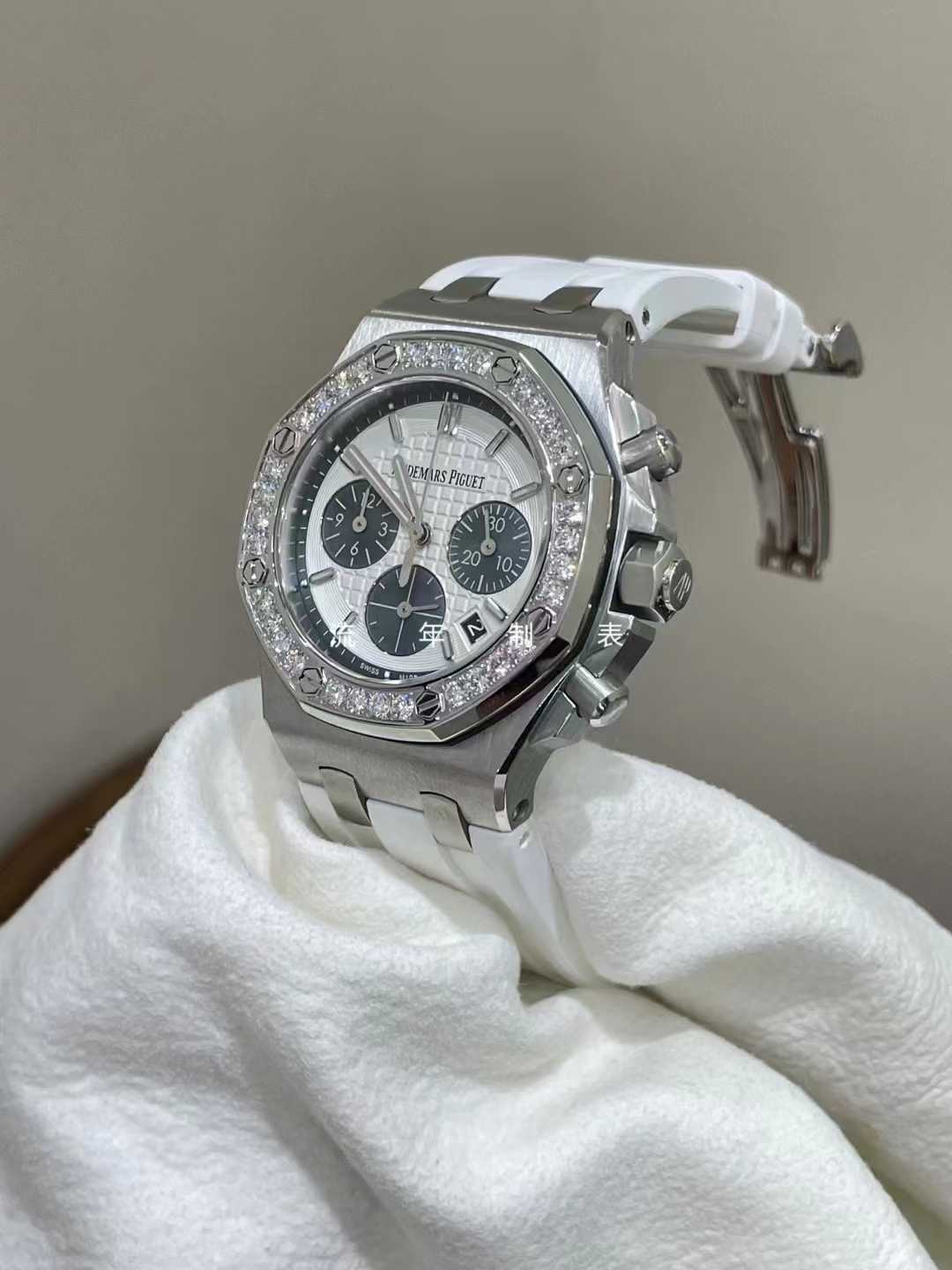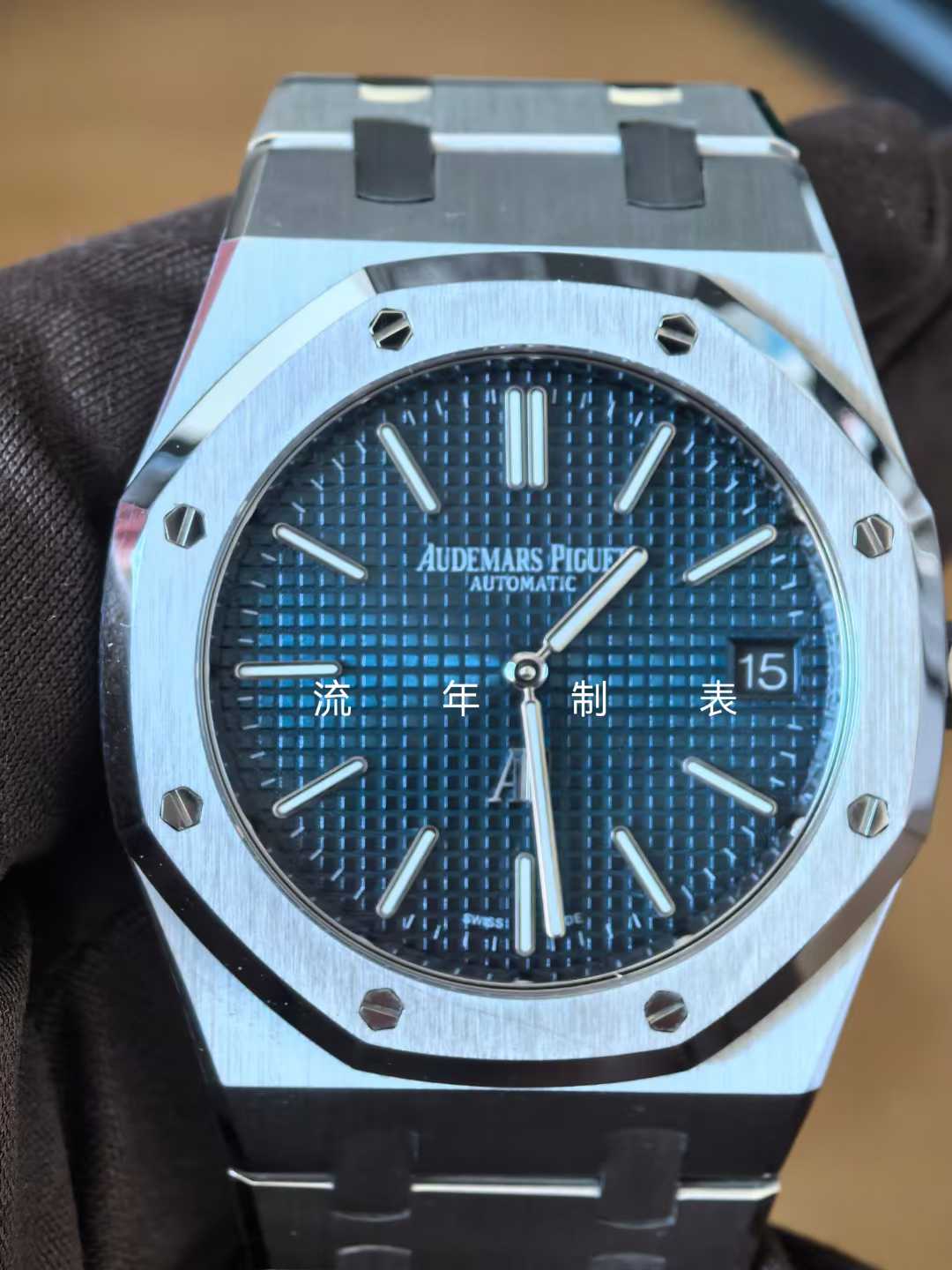




Summary of Key Points about the Modified Audemars Piguet (Model 15412BC Sapphire Skeleton – Low‑Budget Steel Case Version)
Based on the latest video transcript, here are the essential features of this cost‑effective modification plan for the AP 15412BC ruby/sapphire skeleton watch.
1. Model & Context
- Model: Audemars Piguet 15412BC (sapphire / skeleton)
- Previous version: made with 18K platinum case (very expensive)
- This version: low‑budget alternative – uses a steel case instead of platinum
- Movement, gemstone setting, and double balance wheel free‑sprung structure are exactly the same as the original
2. Case – Steel, CNC Original Data
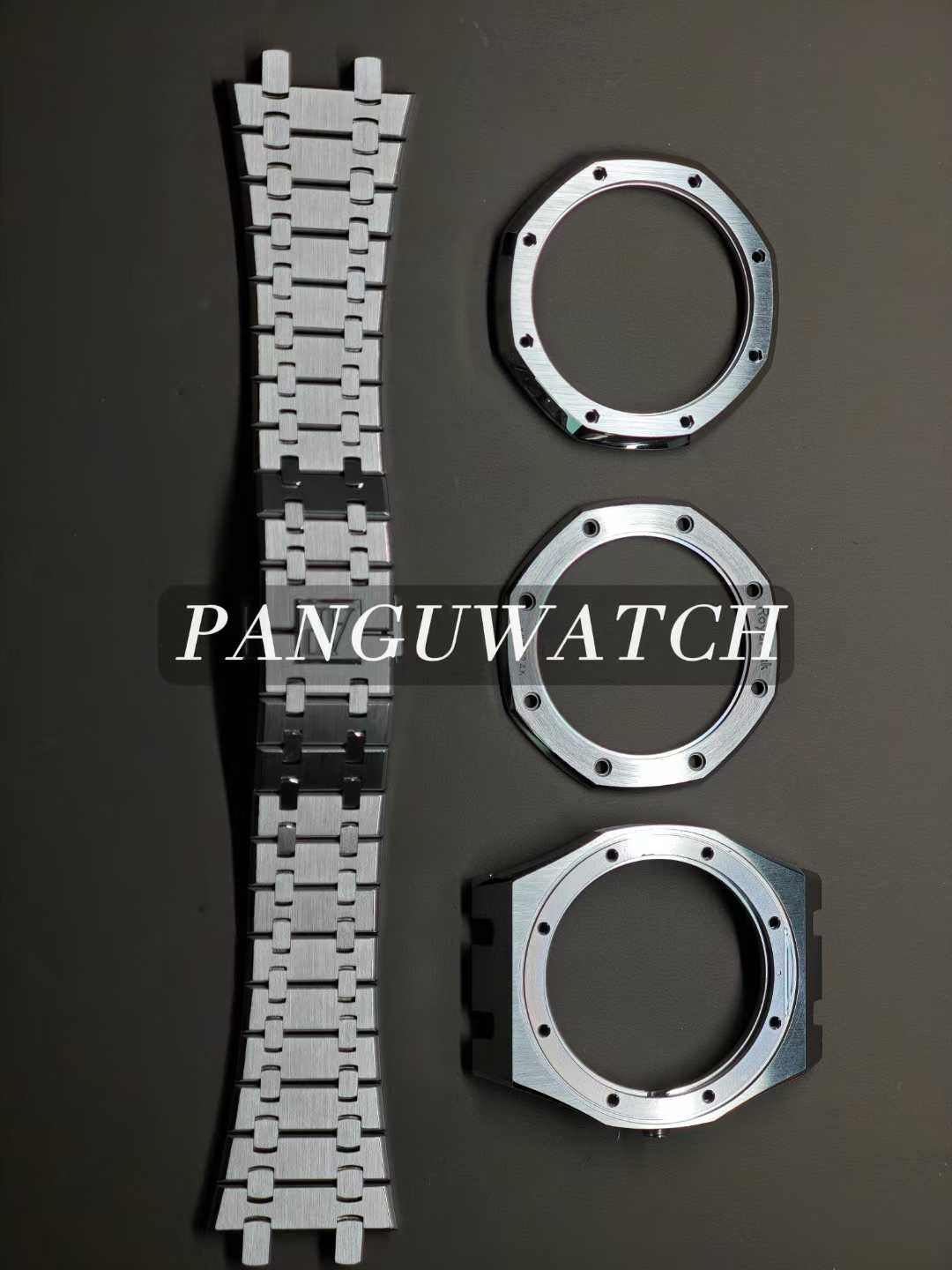
- Developed and produced according to original CNC data
- How to identify a genuine CNC case: Look at the 6 o’clock position – it will be relatively narrow. The gap between the bezel and the middle case will be narrower.
- On non‑original data cases, the gap is wider – completely wrong.
- Case dimensions are completely consistent with the platinum version
- Brushing, polished surface treatment, chamfer grinding – all handled very well
3. Gemstone Setting – Rubies
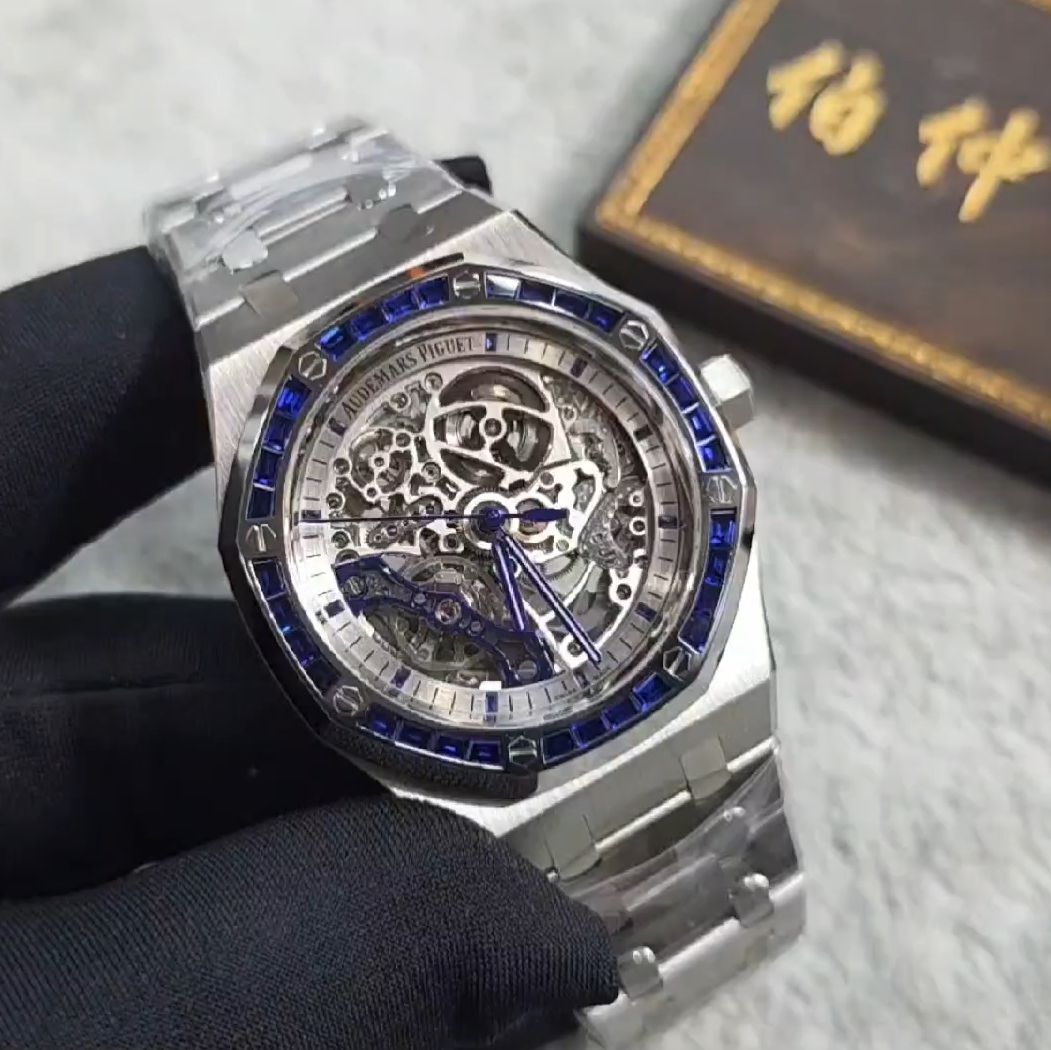
- Bezel set with rubies
- Important detail: The gemstones leave a certain gap – they are not set too large to fill the entire bezel.
- Original AP gemstone setting process leaves gaps like this – gemstones are smaller, not very large. This is a key detail to check.
4. Dial & Hands
- The movement echoes the outer ring – hands are blue, central seconds hand is also blue
5. Movement – True Double Balance Wheel, Free‑Sprung
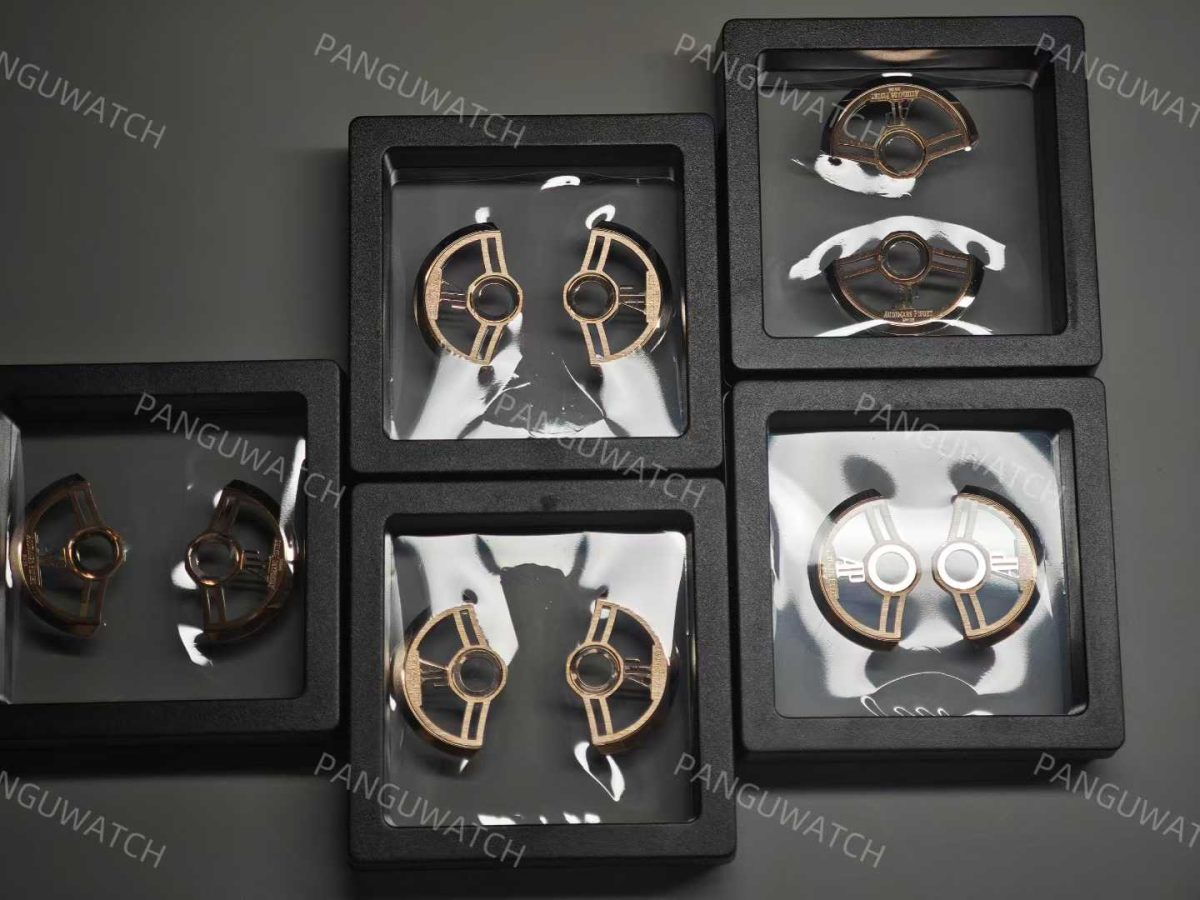
- Skeletonized modification – true double balance wheel movement
- Double balance wheel means: balance wheel on the top layer and balance wheel on the lower layer – both visible
- Structure is completely consistent with the original
- Around the balance wheels, there are counterweights – it is a free‑sprung (non‑caliber) movement
- This is an identifying feature – through modification, we get as close as possible to the original movement architecture
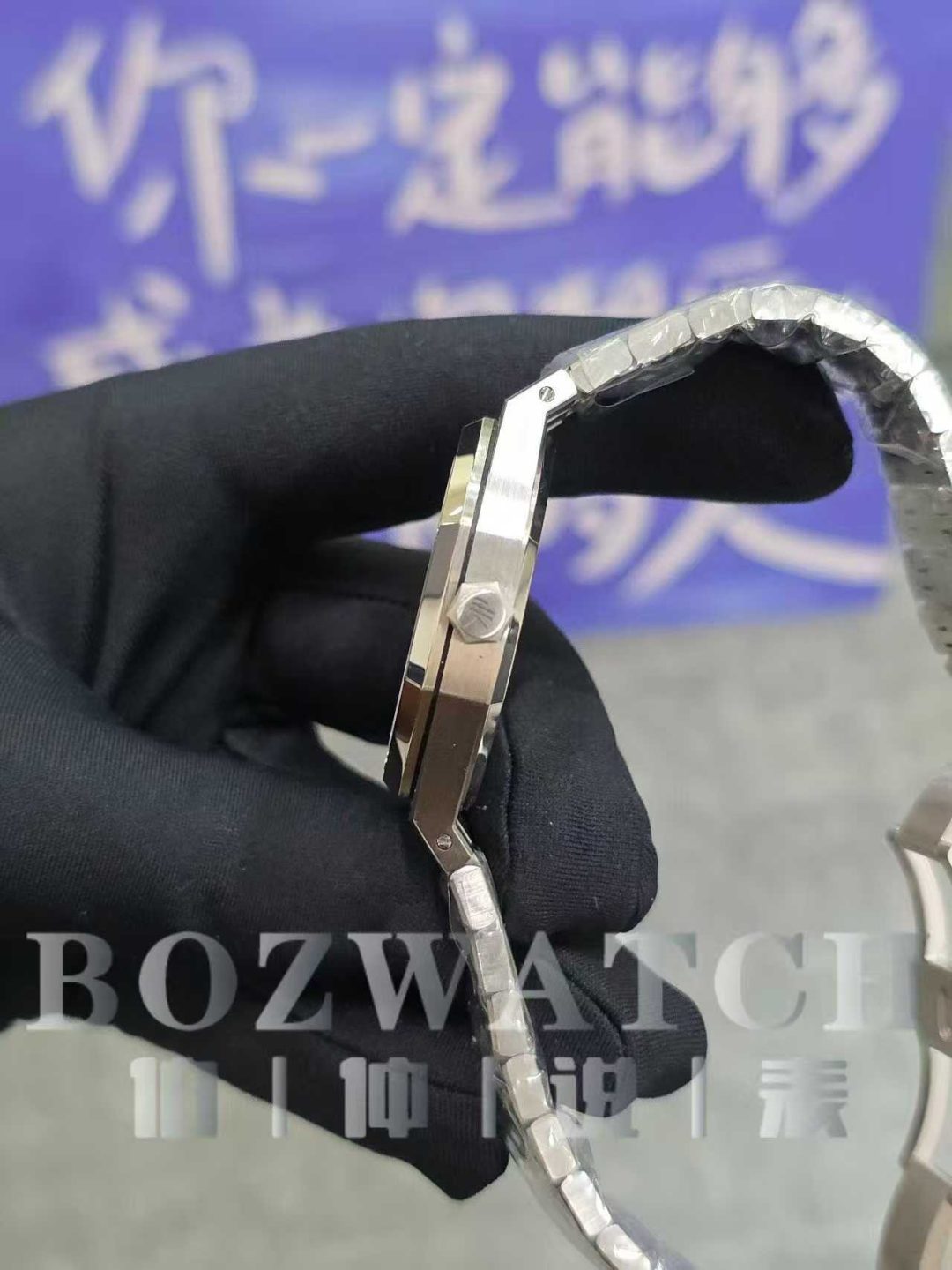
6. Thickness – Ultra‑Thin
- This watch is an ultra‑thin watch – thickness achieves the same as the genuine
- Relatively thin
7. Back of Movement
- Mechanical skeletonization is more obvious, higher
- Back of the movement is silver in color
8. Value Proposition
- Low‑budget modification plan (steel case instead of platinum)
- Upgraded with a double‑balance‑wheel skeleton movement and a steel case
9. Key Quality Checklist for AP 15412BC (Steel Case Version)
| Component | What to Look For |
|---|---|
| Case | Steel, CNC original data – narrow at 6 o’clock, narrow bezel‑middle case gap |
| Case finishing | Delicate brushing, polished surfaces, proper chamfer |
| Gemstone setting (bezel) | Rubies with visible gaps (not overfilled) – matches original process |
| Hands | Blue (hour, minute, central seconds) |
| Movement | True double balance wheel (top + lower layers) |
| Balance counterweights | Present – free‑sprung (non‑caliber) structure |
| Skeletonization | High – matches original |
| Thickness | Ultra‑thin – same as genuine |
| Back of movement | Silver color, high skeletonization |
Concluding Comment
This video presents a cost‑effective alternative to the platinum‑cased AP 15412BC ruby skeleton watch. The premium version uses an 18K platinum case, which is very expensive. The low‑budget version uses a steel case developed from original CNC data – identified by the narrow 6 o’clock profile and the narrow gap between bezel and middle case. The gemstone setting (rubies on the bezel) follows the original AP process: the stones leave visible gaps and are not overfilled – a key detail often missed on cheaper replicas. The hands are blue (matching the movement). The movement is a true double balance wheel (top and lower layers) with counterweights – a free‑sprung (non‑caliber) structure – achieving the same skeletonization and architecture as the genuine. The watch is ultra‑thin, matching genuine thickness. The back of the movement is silver with high skeletonization.
Strengths:
- Affordable steel case – significantly cheaper than platinum, while maintaining correct dimensions and finishing (brushing, polishing, chamfer).
- Original CNC data case – identifiable by narrow 6 o’clock and narrow bezel‑middle case gap (a useful quality check).
- Correct gemstone setting – rubies with gaps, not overfilled – matches original AP process.
- True double balance wheel movement – top and lower layers, both visible, with counterweights – free‑sprung (non‑caliber). This is a significant technical achievement for a modified watch.
- Ultra‑thin – thickness matches genuine.
- Blue hands – matches the original aesthetic.
- High skeletonization – both front and back.
Final verdict: For collectors who love the AP 15412BC skeleton but cannot afford the platinum case (or the platinum‑based modified version), this steel‑case version offers a highly cost‑effective entry. The movement is the star – a true double balance wheel with counterweights and free‑sprung structure, achieving the same skeletonization and thickness as the genuine. The case, while steel, is made to original CNC data with correct finishing and the correct narrow gap detail. The ruby bezel setting follows the original gap‑leaving process. The blue hands and silver movement back complete the look. The only significant compromise is the case material (steel vs. platinum), which affects weight – but for the price difference, many buyers will find this acceptable. As always, independent verification of the movement’s double balance wheel functionality and case finishing is recommended. For the budget‑conscious skeleton AP enthusiast, this is an excellent choice. Bozwatch’s emphasis on the narrow 6 o’clock, the bezel gap, and the double balance wheel provides a solid checklist. This is the “spend less, still enjoy a true double balance wheel skeleton” proposition.
Hello, everybody. This is Bozwatch.
Every watch is a work of art, a testament to time, and I’m a big fan of them. I also hope to help my fellow watch enthusiasts step on fewer pitfalls on their journey and find their own “Bole” (discerning patron).
Later, fans requested to know about Audemars Piguet’s skeleton series watches. I’ve filmed two previous episodes explaining the price of the AP 15412BC ruby – which is made of 18K platinum to create the entire watch. But a whole watch made of 18K platinum actually has a relatively high cost. So some customers asked: “Mr. Bo, is there a low‑budget modification plan we can choose?”
Well, today it’s here.
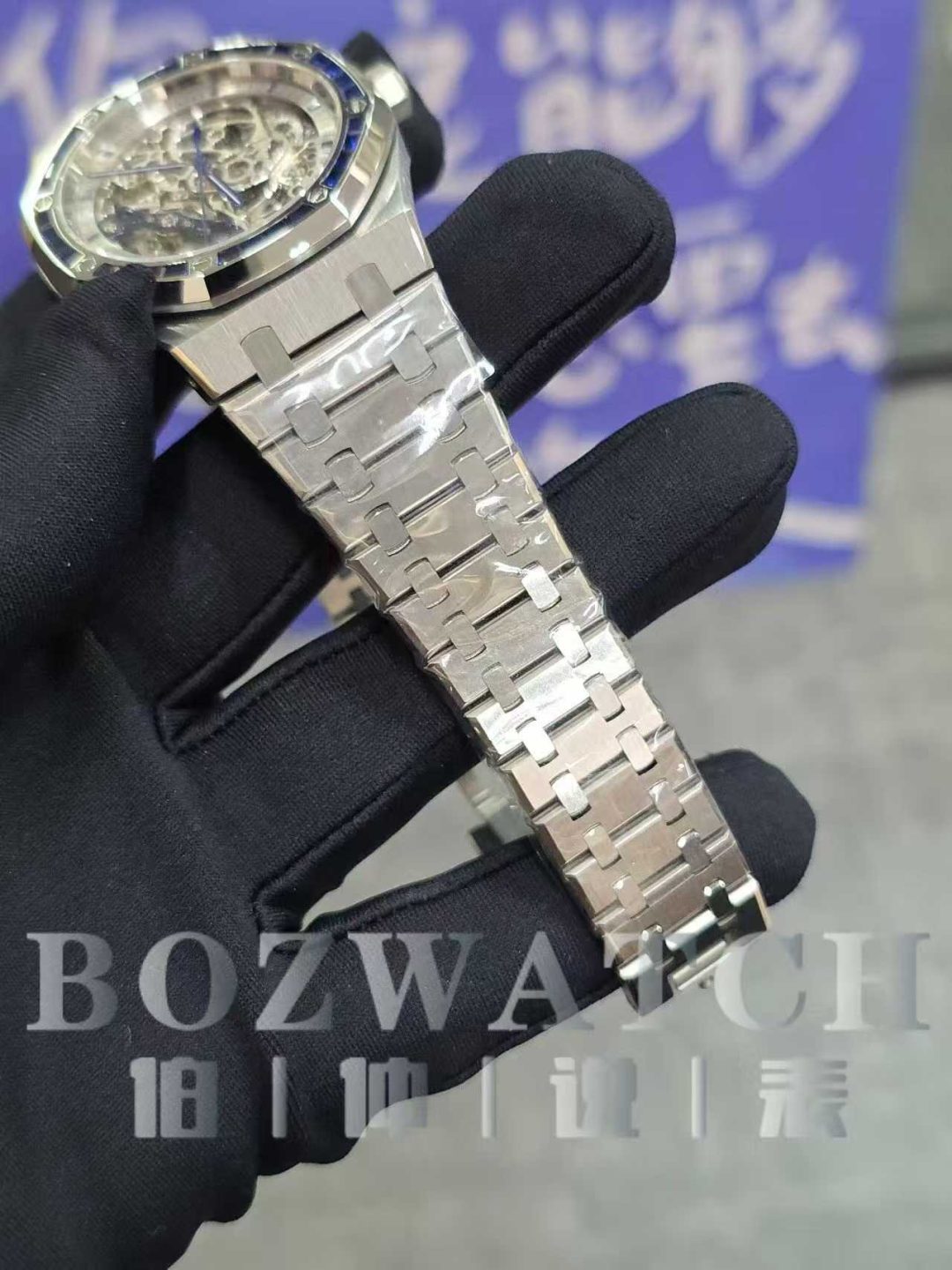
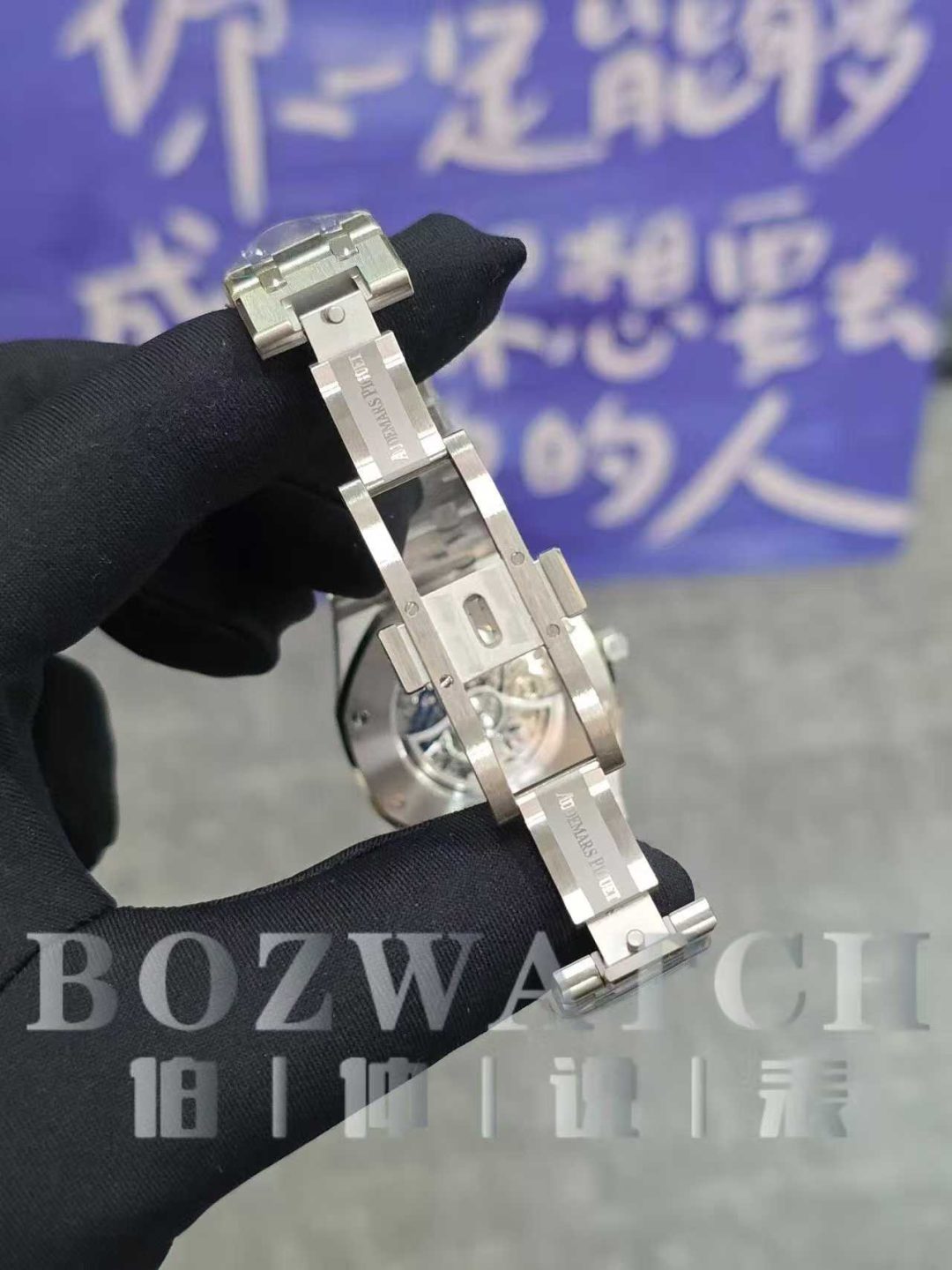
This watch is also an AP 15412BC sapphire (skeleton). This watch is not made with a platinum case – it is made with a steel case. Except for the case material being different from platinum, the movement inside, the outer gemstone setting, and its modified double balance wheel with a free‑sprung (non‑caliber) structure can be exactly the same as the original.
First, our steel case is not made by ordinary methods. It is also developed and produced according to original CNC data. How can you distinguish a case developed with original CNC data? You might want to look at the 6 o’clock position – it will be relatively narrow. The gap between the bezel and the middle case will be narrower. On other cases not developed with original data, the gap is wider – that’s completely wrong.
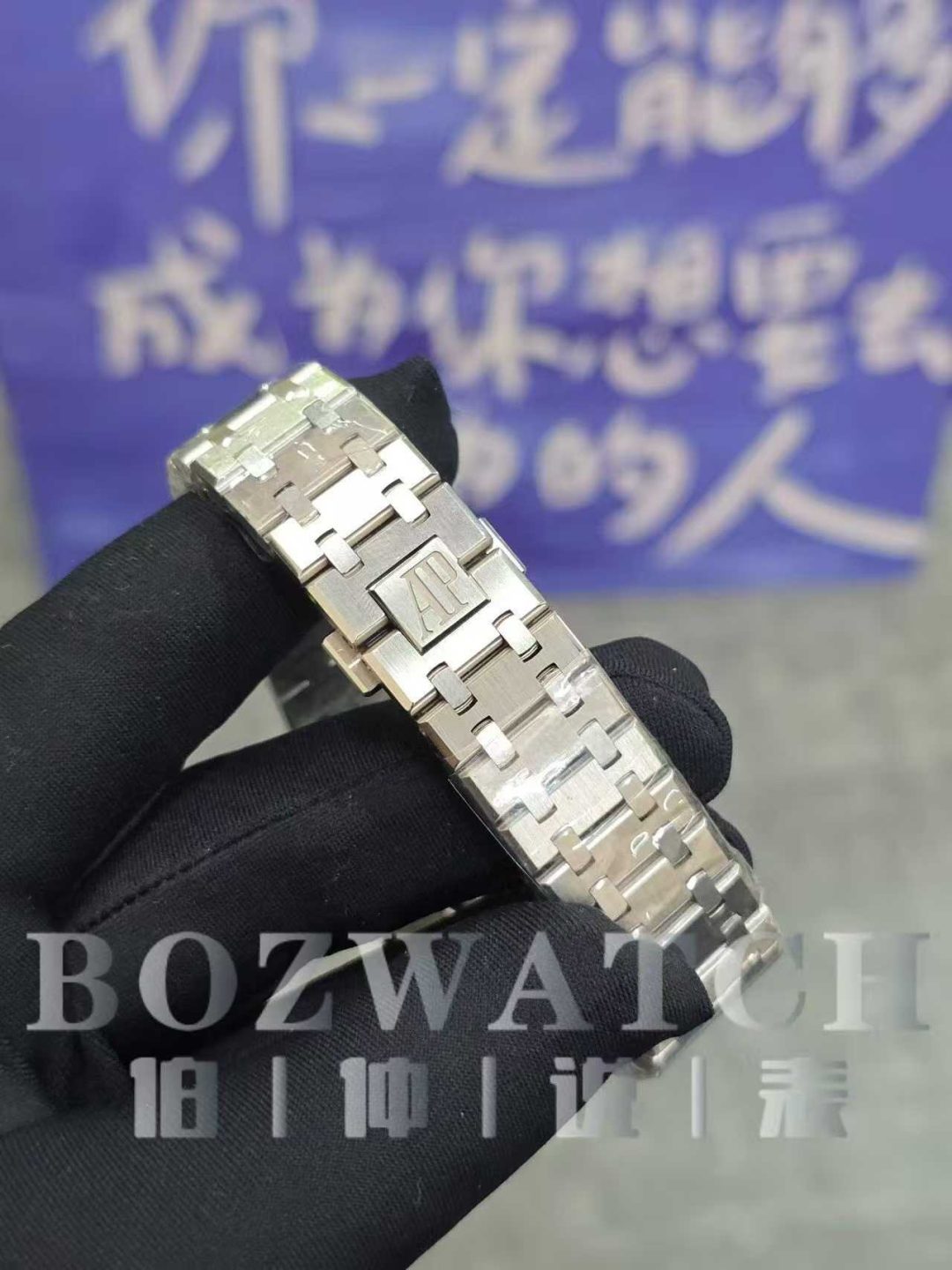
For this watch, its case dimensions are completely consistent with the platinum version – including the brushing, polished surface treatment, and chamfer grinding – all handled very well, very nice.
Now, the gemstone setting on this watch uses rubies. The bezel is set with gemstones, leaving a certain gap. Do you see it? On some gemstone settings, the gems are set too large, filling the entire bezel. You can check online – the original gemstone setting process leaves gaps like this. The gemstones are smaller in size, not very large. These are important details.
The movement inside also echoes the outer ring – the hands are blue, and the central seconds hand is also blue. It is a skeletonized modification and a true double balance wheel movement.
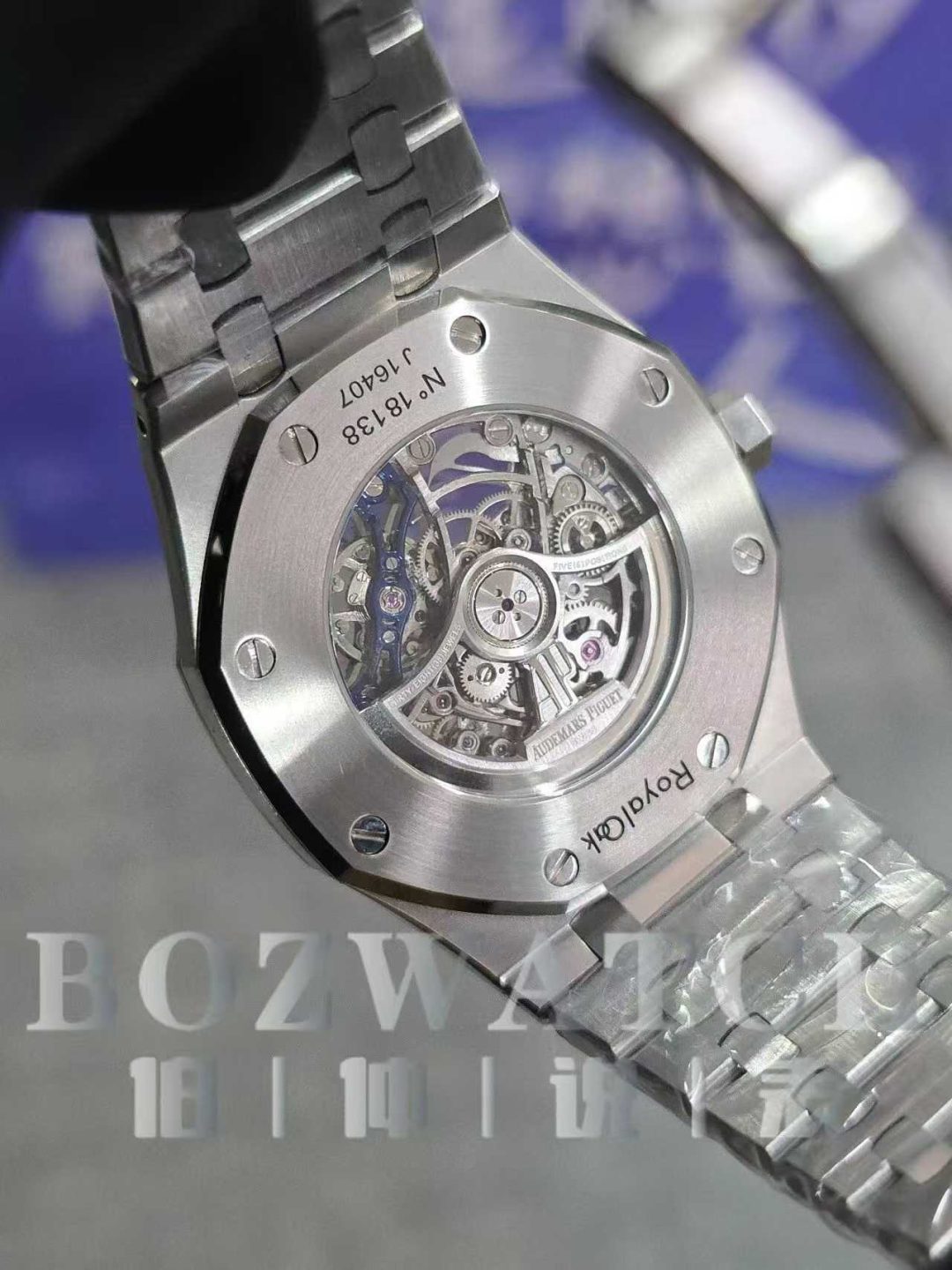
What does double balance wheel mean? There is a balance wheel on the top layer, and also a balance wheel on the lower layer. Do you see it? The structure of this double‑balance‑wheel movement is completely consistent with the original. Around the balance wheels, there are counterweights – and it’s a modified free‑sprung (non‑caliber) movement. This is an identifying feature. Through modification and customization, we get as close as possible to the original movement architecture and craftsmanship – this degree of skeletonization and the double balance wheel design.
This watch is an ultra‑thin watch – do you see it? Its thickness achieves the same as the genuine. It’s relatively thin. Let me show you the movement on the back – the mechanical skeletonization is more obvious, higher. The back of the movement is also silver in color.
This is an AP 15412BC – a more cost‑effective modification plan, upgraded with a double‑balance‑wheel skeleton movement and a steel case. A simple watch sharing for you.
If you like this AP skeleton watch, we can discuss it together.
Today’s Bozwatch watch sharing ends here. If you like Bozwatch’s watch videos, please double‑tap to like and follow. See you next time.